Cheltenham Festival Exotic Bets: Wheel Bet Tactics for Jump Racing’s Pinnacle
 Available in US
Cheltenham Week changes everything about how I approach exotic betting. The normal rhythms of the season give way to four days of relentless Grade 1 action, massive pools, and betting intensity that exhausts even experienced punters. My first Festival as a serious exotic bettor ended with depleted funds by Wednesday evening. The lessons from that draining experience now shape my entire Festival preparation, from bankroll allocation through to race-by-race construction.
The Festival represents jump racing’s ultimate examination. Twenty-eight races across four days, including fourteen Grade 1 contests, attract the best horses from Britain and Ireland. Field sizes exceed everyday meetings. Betting turnover dwarfs normal fixtures. The combination creates both exceptional opportunity and exceptional risk for wheel bet practitioners. Navigating both requires specific tactical adjustment that standard approaches cannot provide.
Festival Field Sizes
Jump racing averaged 7.84 runners per race in 2025, down from 8.49 the previous year. Cheltenham Festival fields typically exceed these averages significantly, with championship races regularly attracting double-figure entries. The Supreme Novices’ Hurdle, Champion Hurdle, and Gold Cup consistently draw 12 to 20 runners when conditions suit. This scale positions Festival exotics favourably compared to everyday jump racing.
The larger fields create mathematical opportunity that smaller everyday fields cannot match. A 16-runner Champion Hurdle produces 3,360 possible trifecta combinations. The complexity generates the payout potential that makes exotic betting worthwhile. Compare this to a typical Tuesday afternoon meeting where 8-runner races create just 336 trifecta combinations. The Festival offers genuine exotic structure rather than the compressed options of normal cards.
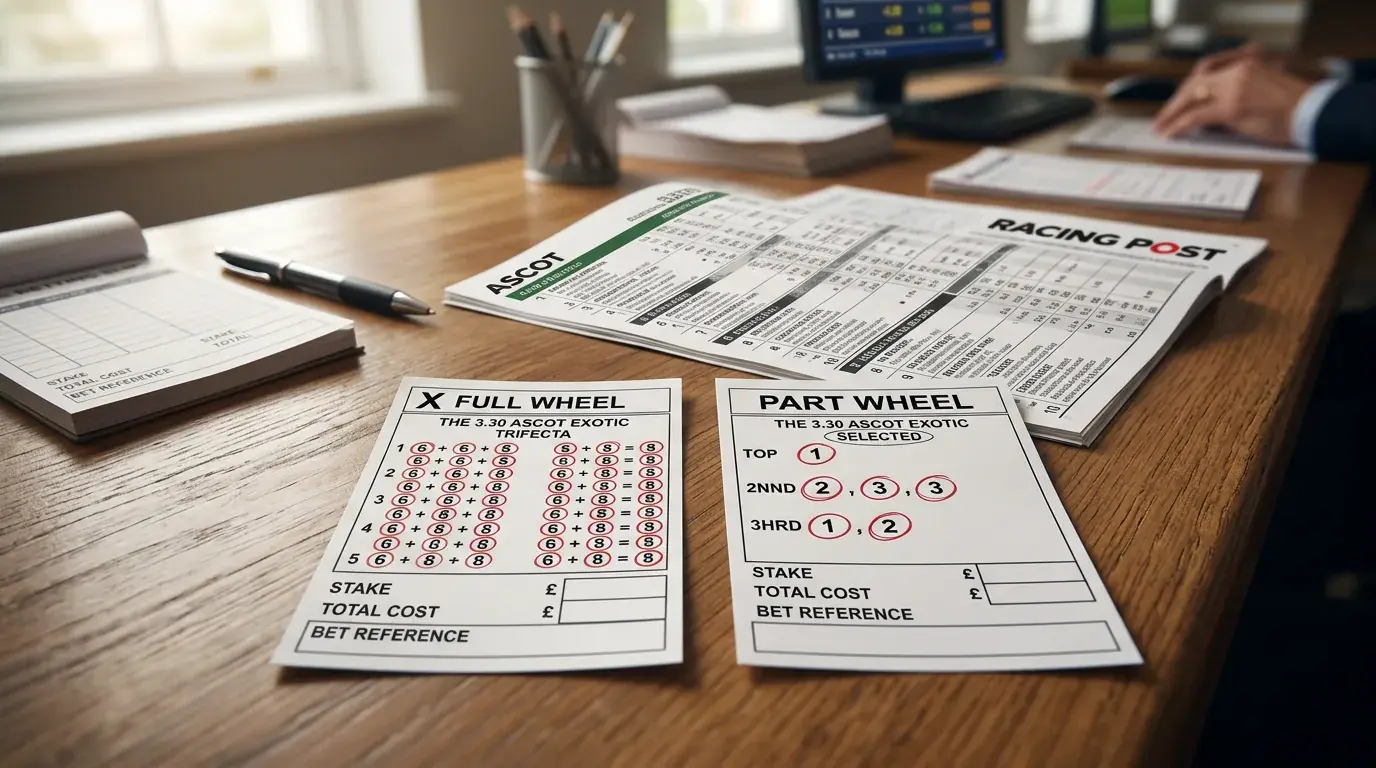
However, larger fields also mean higher wheel costs. A full trifecta wheel with one key horse in a 16-runner race creates 210 combinations. Spread that across seven races per day and you exhaust most bankrolls before the handicaps even run. Festival field sizes demand part wheel discipline more strictly than normal meetings. The temptation to chase every race must be resisted in favour of selective engagement.
Quality of opposition affects field dynamics differently than everyday racing. Festival runners have qualified through strong prior performances. The bottom half of a Festival field often contains horses that would be favourites at standard meetings. This compression makes prediction harder despite the larger number of runners. You face twenty good horses rather than twelve mixed-ability horses. That distinction matters for key horse selection and coverage breadth.
Favourite Performance at the Festival
Cheltenham Festival 2024 produced favourite victories in 7 of 21 races, a 33% strike rate perfectly aligned with the broader UK average. This figure provides important calibration for wheel construction. One third of Festival races go to the market leader. Two thirds go to other horses. That balance suggests including favourites in coverage while recognising their failure rate remains substantial.
The Irish challenge complicates favourite assessment. Irish-trained horses arrive at Cheltenham with form from a different jurisdiction, making direct comparison difficult. Irish favourites sometimes disappoint when facing British rivals at their peak. British favourites sometimes underperform against fresh Irish challengers. Cross-channel form interpretation adds uncertainty that everyday racing does not present.
Grade 1 races attract the most reliable favourites. These championship events pit proven horses against each other with less room for handicapping-style uncertainty. When the Champion Hurdle favourite has demonstrated clear superiority over Champion Hurdle-quality opposition, the form evidence supports market confidence. Lower-grade Festival races, including the handicaps and conditions events, see favourites beaten more frequently as competitive depth increases.
My Festival favourite strategy differentiates by race type. Championship races warrant favourite inclusion as potential key horses. Handicaps demand broader coverage that treats the favourite as one contender among many. The handicap heats at Cheltenham attract such competitive fields that any horse in the top ten of the betting can realistically place. Keying a single favourite in these races introduces unacceptable concentration risk.
Multi-Race Bankroll Management
Twenty-eight races over four days creates cumulative exposure that individual race analysis misses. The Festival demands pre-event bankroll planning that accounts for the entire week rather than taking each race as an isolated decision.
I allocate a fixed Festival exotic budget before the meeting begins. That amount represents what I can afford to lose entirely without affecting my broader financial situation. Divide the budget across the four days, then subdivide each day’s allocation across the seven races. This creates per-race limits that prevent early losses from consuming resources needed for later opportunities.
Race selection within each day matters as much as construction within each race. Not every Festival contest offers equal exotic value. The championship races attract the most betting volume and produce the largest pools, potentially generating better dividends for correct predictions. Lesser races on the card sometimes offer smaller pools where a few large bets can distort payouts. Concentrate activity where pool liquidity supports fair value.
Recovery discipline prevents Festival disaster. After losing days, the temptation to increase stakes chasing losses destroys more bankrolls than any other single factor. The pre-set daily limits exist precisely to prevent this behaviour. Accept that some Festival days will end in deficit. The goal is net positive across the four days, not perfection in each race.
The complete wheel bet guide provides the foundational strategy that Festival betting adapts rather than replaces. The same principles of key horse selection, cost management, and part wheel construction apply. Festival conditions modify their implementation without changing the underlying logic. Master the basics first, then adjust for Cheltenham’s unique characteristics.
Finally, remember that the Festival will return next year regardless of this year’s results. Survival matters more than maximisation. A disastrous Festival that wipes out your exotic bankroll eliminates future opportunities. A disciplined Festival that produces modest returns preserves capital for the remaining season and next year’s meeting. That long-term perspective should guide every decision during racing’s most intense week.
Keep records of your Festival exotic activity. Which races produced the best returns relative to stakes? Which constructions worked and which failed? This data proves invaluable when planning next year’s approach. The Festival’s patterns repeat with variations, and your personal performance data illuminates what works specifically for your selection style and risk tolerance. Learning from each Festival makes the next one more productive.
The Cheltenham Festival offers exotic bettors four days of unparalleled opportunity. Respect the challenge, prepare thoroughly, and execute with discipline. Those who do will find the meeting rewarding in ways that everyday racing cannot match.
How do Cheltenham field sizes compare to regular meetings?
Festival fields significantly exceed everyday jump racing averages. While UK jump racing averaged 7.84 runners per race in 2025, Championship races at Cheltenham regularly attract 12 to 20 runners. This creates genuine exotic betting opportunity with meaningful combination complexity and payout potential.
What percentage of Cheltenham favourites win?
At the 2024 Festival, favourites won 7 of 21 races, a 33% strike rate matching the broader UK average. This means two-thirds of Festival races go to horses other than the market leader. Include favourites in coverage but do not rely on them exclusively, especially in handicap races where competitive depth increases unpredictability.
Prepared by the Horse Racing Wheel bet editorial staff.