Exacta Wheel Bets Explained: Cost Formulas and UK Forecast Strategy
 Available in US
Three years into my time at Tote operations, I watched a punter at Cheltenham turn a modest exacta wheel into a four-figure return. His key horse finished second at 14/1, with the winner starting at 8/1. The Computer Straight Forecast would have paid him around £180. The Tote Exacta paid £247. That 37% difference came from nothing more than understanding which betting pool to use.
The exacta wheel remains one of the most misunderstood weapons in the exotic bettor’s arsenal. It sits in a strange middle ground between the simplicity of a straight forecast and the combinatorial complexity of trifectas. Get the maths wrong, and you bleed money on unnecessary combinations. Get it right, and you access returns that consistently outperform fixed-odds alternatives. Tote+ Exacta beats the CSF in 77% of races, delivering 21% more value on average. Those margins compound over a season.
I have spent nine years dissecting exotic wager structures for UK racing, first from inside the Tote system and later as an independent analyst. What I keep seeing is punters either avoiding exacta wheels entirely because the calculations seem opaque, or wheeling every horse in sight without considering whether the cost justifies the coverage. Both approaches leave money on the table. This guide strips the exacta wheel down to its mechanical components. By the end, you will know precisely when to deploy it, how to calculate costs in seconds, and why the UK forecast market offers structural advantages that most bettors ignore.
What Is an Exacta Wheel Bet
Before we touch any formulas, I need you to forget everything American handicapping content has told you about exactas. In the UK, we call this bet a forecast. Same mechanics, different name. You are predicting which horse finishes first and which horse finishes second, in that exact order. Miss the order and you collect nothing.
A straight exacta means picking one horse for first and one horse for second. Simple, clean, and brutally difficult to hit consistently. The wheel changes the equation. Instead of selecting a single horse for each position, you anchor one horse in a fixed position and wheel the other position through multiple selections. Your key horse becomes the pivot point around which all your combinations rotate.
Say you have strong conviction that horse number 4 will finish first. You are less certain about the second-place finisher, but you have narrowed it down to a competitive group. Rather than placing five separate straight exactas with horse 4 over horses 1, 2, 5, 7, and 9, you wheel horse 4 in first position over those five contenders in second. One bet slip, five combinations, one key horse.
The wheel works in reverse too. Perhaps you believe horse 4 will definitely hit the frame but might not have the pace to win. You can wheel horse 4 in second position under multiple potential winners. Same principle, different orientation. The key horse remains constant while the other position cycles through your selected runners.
What makes the wheel powerful is its precision. Unlike a box bet where every horse can finish in any position, the wheel assumes you have stronger information about one finishing position than the other. That conviction translates directly into cost savings. Fewer combinations mean lower outlay for the same targeted coverage.
The Full Wheel Formula
My first week analysing Tote pool data, I made the embarrassing mistake of assuming exacta wheels required complex mathematics. The reality is almost insultingly simple once you see the pattern.
A full wheel means you are wheeling your key horse against every other runner in the field. If you key horse 4 to win in a ten-horse race, you are covering horse 4 finishing first with horses 1, 2, 3, 5, 6, 7, 8, 9, and 10 finishing second. Nine combinations. The formula crystallises immediately: combinations equal field size minus one.
Written out: Combinations = n – 1, where n represents total runners.
Twelve-horse field with a key horse wheeled to win? Eleven combinations. Twenty-runner handicap at a big festival meeting? Nineteen combinations. The key horse cannot finish second to itself, so you always subtract one from the field size.
Cost calculation follows directly. Multiply your combinations by your unit stake. At £2 per combination in a ten-horse field, your full wheel costs £18. At the Tote minimum of £1, that same wheel runs £9. The arithmetic stays linear regardless of field size.
Now consider the reverse orientation. You key horse 4 to finish second, wheeling all other horses above it in first position. The formula remains identical. Horse 4 cannot beat itself, so you still get n – 1 combinations. The maths does not care about orientation, only about excluding the key horse from the wheeled position.
Where punters stumble is conflating full wheels with box bets. A box puts all selected horses in all positions. An exacta box on three horses gives you six combinations: A over B, A over C, B over A, B over C, C over A, and C over B. A wheel on three horses, keying one to win, gives you only two combinations. The structural difference matters enormously when you scale to larger fields.
Consider an eight-horse field. A full wheel keying one horse to win costs seven combinations. An exacta box on all eight horses costs 56 combinations. Same field, eight times the outlay for the box. The wheel forces you to commit to a position, and that commitment reduces cost while maintaining targeted coverage.
Part Wheel Calculations
Full wheels have a glaring weakness: they assume you have no opinion on the secondary position beyond excluding your key horse. In practice, you almost always have some view on which horses are unlikely to fill the frame. Part wheels let you act on that information.
The arithmetic adapts cleanly. Instead of wheeling against the entire field minus your key horse, you wheel against a selected subset. Key horse 4 to win, wheeled over horses 2, 7, and 9 in second position. Three combinations. Cost equals selected horses multiplied by unit stake.
Part wheel formula: Combinations = number of horses in wheeled position.
The elegance here lies in the risk-reward trade-off. Full wheels protect you against surprises in the secondary position but spread your capital thin. Part wheels concentrate capital on outcomes you deem more likely while accepting the risk that an excluded horse fills the frame.
Favourites in UK racing win roughly 30-35% of all races. That leaves 65-70% of races going to non-favourites. When you construct a part wheel, you are implicitly assigning probabilities to secondary finishers. If you believe three horses cover 80% of the likely second-place outcomes, wheeling against those three concentrates your exposure where it matters most.
The decision matrix becomes: how many horses do I need in the wheeled position to capture sufficient probability without diluting my returns across too many combinations? There is no universal answer. A high-class conditions race with five genuine contenders demands different coverage than a weak maiden with one obvious improver and a field of exposed plodders.
I tend to work backward from two constraints: total budget and minimum acceptable return. If I have £20 allocated to an exacta wheel and want each combination to carry meaningful weight, I might limit myself to ten combinations at £2 each or four combinations at £5 each. The part wheel structure lets me match the number of secondary selections to these constraints.
One tactical note: part wheels reward punters who can identify which horses belong in the frame without necessarily knowing who wins. If your handicapping strength lies in spotting solid place horses rather than picking winners, consider keying your strongest place candidate in second position and wheeling potential winners above them. The part wheel adapts to your edge rather than forcing you into a one-size-fits-all structure.
Cost Calculation Examples
Theory without numbers is just philosophy. Let me walk through actual scenarios you will encounter on a typical UK race card.
Start with a Class 4 handicap at Newbury. The field has twelve runners declared. Average flat field sizes in 2025 sit at 8.9 horses, so twelve runners represents an above-average competitive race. You have identified a consistent handicapper who has dropped to an attractive mark and believe he wins this race more often than his 7/2 price suggests.
Full wheel calculation: 12 runners minus your key horse equals 11 combinations. At £2 per combination, total outlay reaches £22. At the Tote minimum of £1, you spend £11. The question becomes whether you genuinely have no view on which horses might fill the frame.
Reviewing the form, you eliminate the bottom four in the betting as either out of form or facing conditions they have never handled. You also scratch the market leader, reasoning that at 5/2 he offers no value in a forecast market where the favourite finishing second still produces modest returns. That leaves six horses you want in your secondary position.
Part wheel calculation: 6 combinations. At £2 per combination, total outlay drops to £12. At £1, you spend £6. You have saved nearly half your stake while maintaining coverage of outcomes you consider realistic.
Now consider the reverse scenario. You are at Haydock for a novice hurdle with eight runners. You believe two horses have the class to win but cannot separate them. However, you have strong conviction that a particular well-bred type from a major yard will hit the frame regardless of which favourite prevails.
Reverse part wheel: Key your frame horse in second position, wheel the two potential winners above. Two combinations. At £5 per combination, total outlay is £10. If either favourite wins with your key horse second, you collect.
Contrast this with an eight-runner exacta box covering three horses. Box formula: 3 x 2 = 6 combinations. Same £5 unit stake means £30 total outlay. The wheel costs a third of the box price while covering the specific outcomes you find most probable.
The compounding effect reveals itself across a full day’s racing. Six races, each with a wheel opportunity. If your average full wheel would cost £15 but targeted part wheels average £8, you save £42 across the card. Over a season of 50 racedays, that compounds to £2,100 in preserved capital available for deployment on stronger spots.
I am not suggesting you mechanically cut coverage to save money. The point is understanding that every combination you add to a wheel must justify itself against the alternative of concentrating that capital elsewhere. Part wheels enforce that discipline structurally.
Tote Exacta vs Computer Straight Forecast
Every bookmaker in Britain offers the Computer Straight Forecast. It calculates forecast dividends using a standardised formula based on starting prices. Convenient, consistent, and almost always inferior to the Tote Exacta. The data is unambiguous: Tote+ Exacta beats the CSF in 77% of races, delivering 21% more value on average.
That 21% edge demands explanation. The CSF relies on a mathematical model that estimates what a fair payout should be based on final odds. The model works reasonably well when results align with market expectations. It consistently undervalues outcomes where the starting prices inadequately reflected true probabilities, particularly in scenarios where late market moves distorted the odds picture.
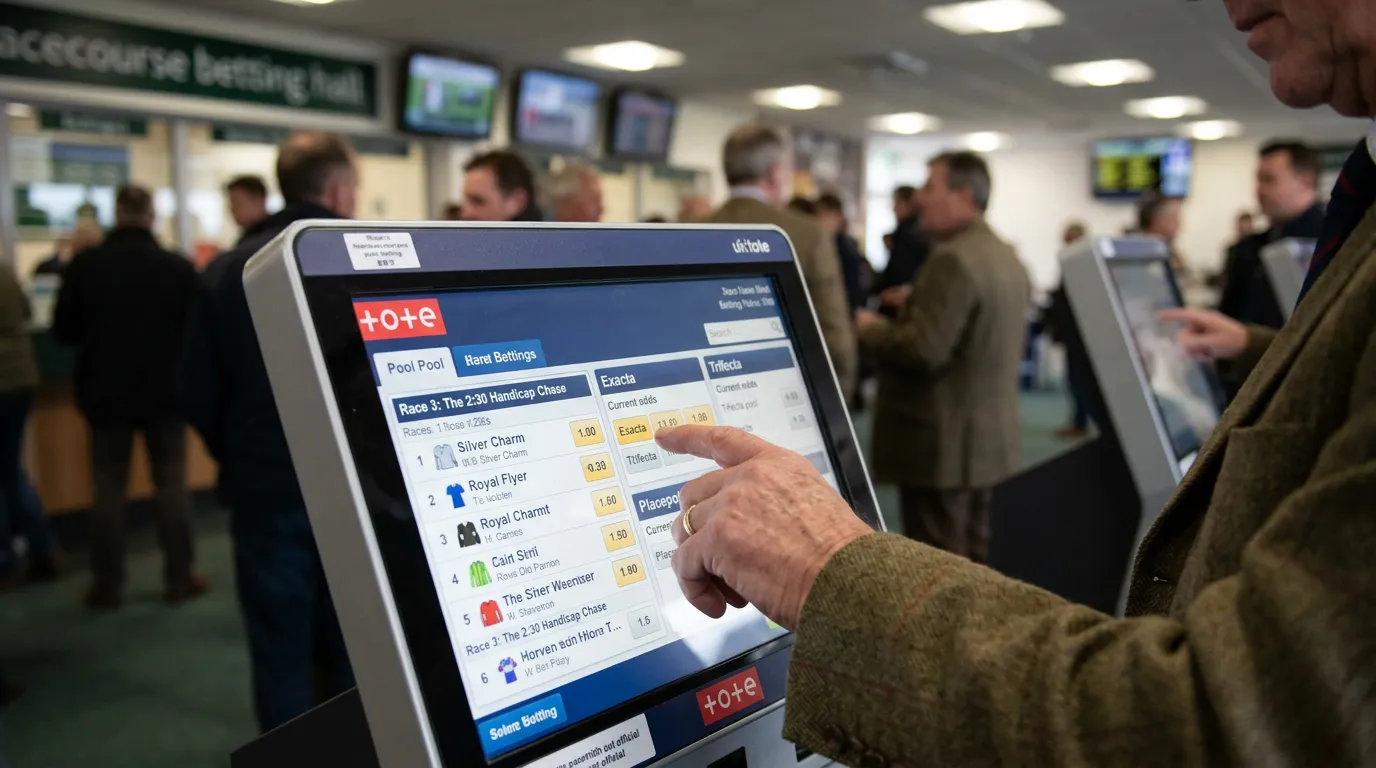
Tote Exacta operates on pure pool mechanics. All stakes flow into a pool. The Tote deducts its 25% commission. The remaining 75% distributes among winning tickets in proportion to stake. No formula, no model, just straightforward division of money. When the pool skews heavily toward one outcome that fails to materialise, winning tickets on the actual result receive disproportionately large payouts.
The structural advantage emerges most clearly in races where public money chases the obvious choice. Heavy favourite runs second to a 12/1 shot that shrewd form readers had identified. The CSF calculates a payout based on those SPs. The Tote Exacta, swollen with losing money from all the punters who backed forecast combinations involving the favourite in first, pays substantially more.
Tote+ adds another layer. It guarantees you receive at least the CSF payout plus an enhancement. You cannot lose money by choosing Tote over CSF, but you frequently gain. The enhancement varies by race and pool size, but the floor remains the CSF dividend. Heads you win, tails you push.
Tactical implications follow. If you are constructing exacta wheels on races where you anticipate the public overplaying certain combinations, route those bets through the Tote. Big festival handicaps with standout favourites. Saturday feature races with media-hyped contenders. Any scenario where money floods into predictable forecast combinations creates value on the alternatives.
Conversely, if you find yourself in a race where public money has correctly identified the most likely outcome and you agree with that assessment, the value differential shrinks. The Tote still tends to edge the CSF, but the margin compresses when pool distribution matches actual probabilities.
One operational note: timing matters. Tote pools grow throughout the betting window. Early prices can appear unrepresentative of final dividends. I prefer placing Tote exacta wheels closer to post time when the pool has stabilised, though the Tote+ guarantee mitigates the risk of unfavourable late shifts.
When to Deploy an Exacta Wheel
Knowing how to calculate a wheel means nothing if you deploy it in the wrong spots. I see punters wheel every race on a card because they have learned the formula but not the context. The tool has specific applications where it outperforms alternatives and specific contexts where other structures serve better.
Exacta wheels shine when you have high conviction on one finishing position and genuine uncertainty on the other. That asymmetry is the key. If you have equal confidence in identifying both winner and runner-up, the straight exacta becomes viable. If you have low confidence in both positions, the trifecta or other multi-leg bets might offer better value per combination.
Strong wheel spots share common characteristics. Races where the form book points clearly to one likely winner but offers multiple candidates for the frame. Races featuring an odds-on shot where the question becomes not who wins but who finishes behind them. Races where one horse has a distinctive profile that makes second place more probable than first.
Odds-on favourites on flat turf win roughly 59% of their races. When you encounter a genuine odds-on shot, the exacta wheel keyed on that favourite in first position becomes statistically sound. You are betting the likely outcome while spreading exposure across uncertain secondary finishers. The cost stays contained because you only need one key horse.
Conversely, avoid wheels when field dynamics suggest your key horse could easily miss the frame entirely. Handicaps where every runner has some chance. Big field sprints where traffic troubles can derail any individual. Jumps races where the favourite’s stamina has never been tested over the trip. These races punish the wheel’s inherent assumption that your key horse will fill one specific position.
Seasonal patterns matter too. Early season two-year-old races feature unraced debutants whose ability remains unknown. Keying any horse with conviction in these races invites disappointment. Later in the flat season, form lines solidify and horses establish consistent profiles. The wheel becomes more reliable when you can base selections on genuine performance data rather than paddock inspection and breeding.
Field size enters the calculation as well. In races with fewer than six runners, the exacta market compresses. Fewer possible outcomes mean lower potential payouts. The wheel still functions mathematically, but the returns often fail to compensate for the risk assumed. I rarely wheel races under six runners unless exceptional circumstances justify the compressed price.
Mistakes That Drain Your Bankroll
Nine years of watching punters construct exacta wheels has given me a catalogue of recurring errors. Most stem from misunderstanding the bet’s purpose rather than botching the arithmetic.
The most expensive mistake is wheeling without genuine conviction on the key position. If you do not have a strong view on which horse wins or which horse finishes second, the wheel offers no structural advantage. You are simply placing multiple straight exactas through a more efficient ticket format. The efficiency gains disappear when the underlying selections lack foundation.
Related to this is the tendency to wheel favourites reflexively. Yes, favourites win 30-35% of races. Yes, odds-on shots win more often still. But favourite-keyed wheels in forecast markets face a mathematical headwind: when the key horse is overbet, the exacta combinations involving that key horse also attract disproportionate money. The Tote pool mechanism works against you when you back the same horses everyone else backs.
Champion trainer John Gosden captured the industry’s broader anxiety when he noted that racing sits at a crisis point, with the traditional symbiosis between betting and the sport under strain. For punters, this translates to pools that often skew in predictable directions. Swimming against that current requires either contrarian key horse selection or tactical timing.
Another common error is neglecting to compare wheel costs against potential returns. A twelve-combination wheel at £2 per combination costs £24. If the likely exacta dividends in that race cluster around £30-50, your expected value compresses severely. One winning combination barely covers the outlay on eleven losing combinations. Before placing any wheel, estimate the range of likely dividends and confirm that winning scenarios deliver meaningful returns above your total stake.
I also see punters constructing part wheels that eliminate obvious candidates through excessive cleverness. Cutting the favourite from your secondary selections because everyone else will have them sounds strategically shrewd. But if that favourite actually finishes second behind your key horse, you have manufactured a loss from what should have been a winning ticket. Eliminate horses based on form assessment, not on misguided contrarianism.
The final systematic error is ignoring pool size. Small pools produce volatile dividends. A forecast pool under £10,000 can swing dramatically based on a few large late bets. If you are placing substantial wheels and the pool is thin, your own money starts influencing the dividend you receive. On major meetings at big tracks, this rarely matters. On quiet midweek cards at smaller courses, it can meaningfully erode your edge.
Making the Exacta Wheel Work for You
The exacta wheel is not a magic formula. It is a structural tool that amplifies the value of accurate handicapping while containing the cost of coverage. If you can identify one position in a forecast with higher confidence than the other, the wheel lets you express that asymmetric view efficiently. If your conviction spans both positions equally or neither position strongly, other bet types serve better.
The maths reduces to simple multiplication. The strategic layer requires understanding when your edge justifies the exposure and when the Tote pool structure offers better returns than fixed-odds alternatives. Start with smaller fields where the combinations stay manageable and the outcomes remain analysable. Build pattern recognition for which race types produce reliable key horses and which race types frustrate positional conviction.
For deeper exploration of wheel bet mechanics across exacta, trifecta, and superfecta structures, the principles remain consistent even as the combinatorics scale upward. Master the exacta wheel first. The more complex exotic bets build directly on this foundation.
How many combinations are in a 10-horse exacta wheel?
A full exacta wheel with one key horse in a 10-runner field produces 9 combinations. The formula is field size minus one, since your key horse cannot finish in both positions simultaneously. At the Tote minimum stake of £1, this wheel costs £9.
Is an exacta wheel better than an exacta box?
Exacta wheels cost less than boxes covering the same horses because they assign one horse to a fixed position. A box on three horses produces 6 combinations while a wheel using one of those horses as the key produces only 2. The wheel is better when you have stronger conviction about one finishing position than the other.
What is the minimum stake for Tote Exacta in the UK?
The Tote Exacta minimum stake is £1 per combination. For a full wheel in an 8-horse field, minimum outlay would be £7. The minimum applies per combination, not per ticket, so larger wheels require proportionally higher minimum stakes.
Can I place exacta wheels on all UK races?
Exacta wheel availability depends on the Tote pool being offered for that race. Most UK flat and jumps meetings carry Tote Exacta pools, but some smaller meetings or early-season fixtures may not. Check the Tote website or your betting platform for pool availability before constructing your wheel.
Created by the ”Horse Racing Wheel bet” editorial team.