Superfecta Wheel Bets: High-Risk Exotic Wagers and UK Cost Calculations
 Available in US
The ticket stub from the 2022 Kentucky Derby still circulates in betting circles as a kind of cautionary legend. A $1 superfecta returned $321,500 when the first four finishers crossed the line in an order that virtually nobody anticipated. The story captures everything seductive and dangerous about superfecta betting: astronomical potential returns coexisting with minuscule hit rates.
Superfecta wheels occupy the extreme end of exotic wagering complexity. You are predicting four horses to finish first, second, third, and fourth in exact order. Adding that fourth position transforms the mathematics from challenging to genuinely forbidding. Where trifecta wheels can spiral beyond budget, superfecta wheels can consume entire bankrolls on a single race if constructed carelessly.
I approach superfectas with more caution than any other exotic bet type. My years analysing pool betting structures have taught me that the superfecta rewards precision in ways that punish exploratory betting. You cannot spray combinations across possibilities and hope variance falls your way. The combination counts are too large and the hit rates too low. Success requires identifying specific finishing orders with enough accuracy that targeted coverage produces sustainable returns.
What follows is not encouragement to add superfecta wheels to your regular betting rotation. It is a framework for understanding when this bet type offers genuine value, how to calculate costs before they overwhelm your staking discipline, and how to manage risk when you do decide the mathematics justify the exposure.
What Makes a Superfecta Different
Strip the superfecta down to its core mechanics and you find the same principle underlying exactas and trifectas: predict finishing order with precision. The superfecta extends that precision to four positions. First, second, third, and fourth must arrive in exactly the sequence you specify. Reverse third and fourth and your ticket is worthless regardless of how accurately you predicted the winner and runner-up.
This additional position changes the bet’s character fundamentally. Exactas ask you to identify two horses in order. Difficult, but achievable with competent handicapping. Trifectas require three horses in order, substantially harder. Superfectas demand four horses in sequence, pushing into territory where skill and fortune intertwine so tightly that separating them becomes nearly impossible.
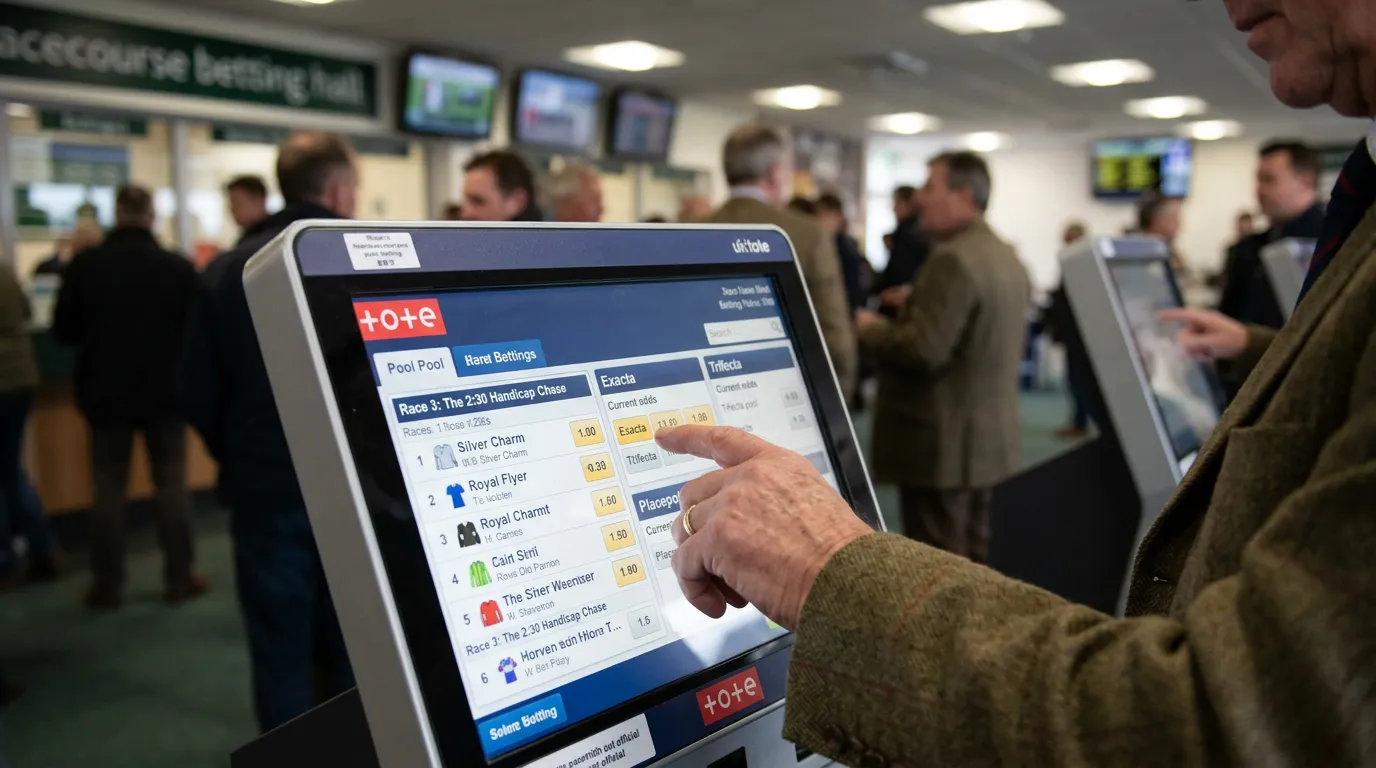
The UK betting market offers limited superfecta availability compared to North America. The Tote does not operate a standard superfecta pool on most meetings. You will find superfectas primarily through bookmaker exotic offerings or on specific high-profile races where pool operators establish dedicated markets. This restricted availability actually serves as useful discipline: if superfectas were available on every race, more punters would lose money more quickly.
A straight superfecta means selecting one horse for each of the four positions. One combination, one chance, maximum difficulty. The wheel structures that make exactas and trifectas more accessible apply to superfectas too, but the scaling operates at a level that turns manageable costs into prohibitive ones with startling speed.
Before exploring wheel configurations, understand that superfectas belong at the extreme edge of exotic betting rather than at its centre. These bets suit specific situations where field dynamics, pool liquidity, and handicapping conviction align unusually well. Treating superfectas as a regular component of race-day activity invites the slow erosion of capital that eventually forces punters out of the game entirely.
Full Wheel Combinatorics
The mathematics escalates with each additional position. Exacta wheels multiply by (n-1). Trifecta wheels multiply by (n-1) x (n-2). Superfecta wheels multiply by (n-1) x (n-2) x (n-3). That third multiplication introduces the combinatorial explosion that defines superfecta economics.
Take a ten-horse field. Single-key superfecta wheel with the key in first position, wheeling all others through second, third, and fourth: 9 x 8 x 7 = 504 combinations. At £1 per combination, your wheel costs £504. The same ten-horse field produced 72 combinations for a trifecta wheel and just 9 combinations for an exacta wheel. The superfecta costs seven times more than the trifecta and 56 times more than the exacta.
Twelve runners? The calculation reaches 11 x 10 x 9 = 990 combinations. Minimum stake approaches £1,000 for a single-key full wheel. Fifteen runners pushes to 14 x 13 x 12 = 2,184 combinations. These numbers explain why full superfecta wheels effectively do not exist in practice. The costs exceed any rational bankroll allocation.
The formula for a single-key full wheel generalises cleanly: (n-1) x (n-2) x (n-3), where n is the total field size. Your key horse cannot occupy any of the other three positions, hence the successive subtraction.
Keying in different positions produces identical combination counts. Key in second position and wheel first, third, fourth through the remaining field: still 504 combinations in a ten-horse race. Key in third: 504. Key in fourth: 504. Position selection does not affect cost, only your handicapping view on where your strongest conviction lies.
Double-key wheels reduce combinations substantially but still produce large numbers. Key two horses in first and second, wheel third and fourth through the remaining field. Formula becomes (n-2) x (n-3). Ten horses: 8 x 7 = 56 combinations. More manageable at £56 minimum, but requiring high conviction on two specific positions.
Triple-key wheels shrink further. Key three horses in first, second, and third, wheel only fourth position. Formula: n-3. Ten horses: 7 combinations. At £7 minimum, this structure approaches affordability but demands certainty across three positions that few handicappers possess.
The arithmetic teaches a clear lesson: superfecta wheels only become financially viable with multiple keys anchoring multiple positions. Single-key structures remain in the realm of theory rather than practice for anyone managing a sustainable exotic betting operation.
Multi-Key Part Wheel Structures
Practical superfecta construction requires aggressive position restriction. You cannot afford to wheel broadly across multiple positions simultaneously. The mathematics simply will not permit it within reasonable bankroll constraints.
Start with the most restrictive structure: the four-key straight superfecta. One horse in first, one in second, one in third, one in fourth. Total combinations: 1. Cost equals your unit stake. This is not a wheel at all but a straight bet. It belongs in your toolkit only when your conviction on all four positions reaches extraordinary levels, which should happen rarely if ever.
The triple-key wheel represents the practical floor for superfecta wheel construction. Lock three horses into three specific positions, wheel the remaining field through the fourth position. If you key horses A, B, and C in first, second, and third respectively, then wheel positions 4 through n in fourth, your combination count equals the number of horses you wheel in fourth position.
Favourites win 30-35% of UK races, which means the market leader finishing fourth happens with meaningful frequency in competitive fields. A triple-key wheel that captures the favourite collapsing into fourth while your keys hold the frame can produce substantial returns from minimal combination counts.
Part wheels without full position locking require precise combination counting. Say you select two horses for first, two for second, three for third, and five for fourth. Combination count: 2 x 2 x 3 x 5 = 60. At £1 per combination, total cost reaches £60. This structure assumes you can narrow each position to a small group while still capturing the likely outcome.
Compare that to a more expansive construction: three horses in first, four in second, six in third, eight in fourth. Combinations: 3 x 4 x 6 x 8 = 576. Cost balloons beyond most individual race budgets. The difference between the two constructions comes down to whether you can realistically eliminate horses from each position based on handicapping rather than budgetary desperation.
Strategic position assignment matters enormously. Your highest-conviction position should contain the fewest horses. If you have strong opinions on the winner but less clarity on subsequent positions, put only one or two horses in first while allowing more latitude below. If you excel at identifying frame horses but struggle to pick winners, consider keying likely frame candidates in second or third while wheeling potential winners above them.
The configuration that produces affordable wheels while maintaining realistic coverage depends entirely on the race at hand. A conditions race with one dominant horse suits keying that horse in first with broader coverage below. A wide-open handicap might not suit superfecta wheels at all because no position offers sufficient conviction to anchor a manageable structure.
When Costs Explode
Understanding exactly where superfecta costs accelerate beyond reason helps you identify the boundary between sensible exotics and reckless gambling. The explosion happens faster than intuition suggests.
Field size drives the fundamental scaling. Each additional runner multiplies combinations at every wheel position. A field of 8 horses with a single key produces 7 x 6 x 5 = 210 combinations. Expand to 10 horses and combinations reach 504. Expand to 12 and you hit 990. The cost does not increase linearly with field size; it follows a polynomial curve that steepens rapidly.
The average field size on Flat Premier fixtures reached 10.97 runners in 2025, essentially eleven-horse races on average. A single-key superfecta wheel on an average premier flat race would cost around 10 x 9 x 8 = 720 combinations or £720 minimum. This number establishes why superfecta wheels virtually never appear on standard race cards. The costs do not fit sustainable betting patterns.
Adding horses to any position multiplies rather than adds. Suppose you have a manageable part wheel at 2 x 2 x 3 x 4 = 48 combinations. Adding one horse to the fourth position takes you to 2 x 2 x 3 x 5 = 60 combinations. Adding one horse to the first position takes you to 3 x 2 x 3 x 4 = 72 combinations. The marginal horse in the first position added 24 combinations while the marginal horse in the fourth position added only 12. Position matters for cost management.
The practical implication: be most ruthless about elimination in the earliest positions. Cutting a horse from your first position saves more combinations than cutting from fourth. If you must expand coverage somewhere, do it in the later positions where the cost multiplier effect is smaller.
Unit stake amplifies the problem. At 50p per combination, a 200-combination wheel costs £100. At £2 per combination, that same structure costs £400. If you want meaningful returns per combination to justify the exercise, you need stakes that make even moderate combination counts expensive. This is not like win betting where you can adjust stake freely. Superfecta wheels carry a minimum complexity cost that demands capital.
Budget your superfecta activity as a percentage of your total exotic allocation. I never commit more than 25% of my exotic bankroll to superfecta plays in a given month, and I typically stay well below that ceiling. The hit rate is too low and the variance too high to support superfectas consuming a dominant share of exotic capital.
The Payout Potential
If superfecta costs are prohibitive, the attraction lies entirely in payout potential. No other bet type offers the same ratio of stake to potential return. When outsiders fill the frame in unexpected sequence, superfecta dividends can reach five figures from single-pound stakes.
The 2022 Kentucky Derby superfecta that returned $321,500 on a $1 ticket represents an extreme but illustrative example. The first four finishers included an 80/1 shot and an outcome configuration that virtually nobody anticipated. The pool mechanics distributed a massive accumulated sum across a handful of winning tickets.
Average superfecta payouts run considerably lower but still substantial. Trifecta dividends on major US races like the Kentucky Derby average around $7,000, with superfectas typically multiplying that by factors of five to fifty depending on result configuration. UK races produce lower absolute dividends due to smaller pool sizes but maintain similar proportional relationships between bet types.
The mathematics of dividends follows directly from combination difficulty. More possible outcomes means fewer tickets hit any given outcome. An 8-horse superfecta has 8 x 7 x 6 x 5 = 1,680 possible finishing orders for the first four positions. A 12-horse superfecta has 11,880 possible orders. A 16-horse handicap has 43,680. As possibilities multiply, the pool divides among fewer winning tickets, pushing dividends upward.
Pool concentration amplifies this effect. If public money floods into combinations featuring the favourite in first, and the favourite finishes fourth behind three unconsidered horses, the winning tickets share a pool swollen by all that losing favourite-centric money. The dividend reflects not just difficulty but also the gap between public expectation and actual outcome.
This dynamic suggests a strategic principle: superfecta value is highest when your view diverges most sharply from public consensus. If you and everyone else think the favourite wins with the second favourite behind, the superfecta covering that outcome pays poorly. If you believe the favourite is vulnerable and the second favourite lacks the pace to finish second, your contrarian structure captures more value when it hits.
The seduction is obvious. Hit one superfecta per month and you might cover an entire season’s exotic betting costs. The reality check is equally obvious: hitting one per month requires either extreme luck or handicapping precision that few possess consistently. Build your superfecta strategy around occasional opportunistic plays rather than systematic coverage.
When Superfecta Wheels Actually Make Sense
Given the structural challenges, under what conditions does a superfecta wheel represent sensible betting rather than wishful spending? The list is shorter than most punters want to believe.
Small competitive fields sit at the top. A seven-horse race with genuine chances distributed across five or six runners offers manageable combination counts. Triple-key structure: key three horses in first, second, third, wheel the remaining four in fourth. Total combinations: 4. If your three keys hit the frame in sequence, you collect regardless of which horse fills fourth. At £20 per combination, total stake reaches £80 for a bet that pays substantial dividends when it lands.
More than 20.5% of UK races now run with five or fewer participants, up from 14.27% in 2019. These small fields were once considered poor betting propositions, but for superfecta purposes they offer structural advantages. A five-horse field has only 120 possible superfecta combinations total. Your wheel does not need to be large to cover meaningful probability.
High-class races with clear pecking orders suit superfecta wheels better than open handicaps. Group races, graded stakes, conditions events where form separates contenders into tiers. You can assign horses to positional bands based on demonstrated ability rather than hoping handicapping equalisation produces chaos.
Festival races with inflated pools deserve consideration. Cheltenham, Aintree, Royal Ascot, and York’s Ebor meeting generate pool sizes where dividends stabilise around fair market-clearing values. The superfecta on a Premier meeting handicap might pay 10,000/1 while the same finishing order at a Monday Wolverhampton card pays 50,000/1 because nobody else had a ticket. The Premier dividend compensates for higher combination costs with more reliable payouts.
Avoid superfectas in several contexts. Wide-open handicaps where every runner has claims produce combination counts that cannot be contained within budgets. Races where you genuinely cannot separate the first four offer no structural advantage from wheel construction. Races with thin pools where your own bet materially influences the dividend you receive if you win. Races where superfecta pools are not actually offered, requiring reliance on bookmaker formulas that may undervalue unusual outcomes.
The common thread is conviction. Superfectas reward bettors who can confidently assign horses to finishing positions with accuracy exceeding random chance. If you can narrow the first four finishers to a relatively small group and sequence them with some reliability, superfecta wheels capture that edge. If you are guessing across all four positions, you are buying lottery tickets at unfavourable prices.
Managing Superfecta Risk
Trainer John Gosden described British racing’s ownership economics as a catch-22: operating costs run high while the traditional owner-breeder model erodes. Superfecta betting involves its own catch-22. The bets that offer the highest potential returns also carry the highest risk of capital destruction. Managing that tension requires discipline that most punters find uncomfortable.
Set a superfecta-specific bankroll that you can afford to lose entirely. Not your main betting bankroll, not your monthly exotic allocation, but a separate pot designated specifically for high-variance superfecta plays. If that pot depletes, stop superfecta betting until it replenishes through other activity or additional deposits. This separation prevents superfecta losses from cascading into your core betting operation.
Establish maximum bet sizing as a percentage of your superfecta bankroll. I use 20% as my ceiling for any single superfecta wheel. If my superfecta pot contains £500, my maximum single wheel costs £100. This constraint means I can survive at least five consecutive losing plays before depletion, giving variance room to work in my favour.
Frequency management matters as much as stake sizing. Superfectas should represent occasional opportunistic plays, not regular betting activity. I might go weeks without placing a superfecta wheel, then find three suitable races on a festival Saturday and play all three within that allocated bankroll share. The discipline is resisting the temptation to force superfectas onto races that do not genuinely suit the structure.
Review results over extended periods rather than reacting to individual outcomes. A year of superfecta betting might produce 40 wheels with 2-3 winners. Those 2-3 winners need to return enough to cover the 37-38 losers plus profit. If your handicapping does not support that mathematics, the strategy fails regardless of any individual result. Evaluate honestly whether your selections actually produce frame horses at rates that justify continued superfecta exposure.
Consider partial hedging on high-stake superfecta plays. If you construct a £150 superfecta wheel anchored on a strong key horse, a £25 win bet on that key provides a safety net if the horse wins but your frame selections fail. The hedge reduces net superfecta profit but also reduces the sting of a keyed winner finishing outside your secondary coverage.
Finally, maintain emotional detachment. Superfecta near-misses where your first three selections hit but fourth position fails produce frustration that can distort subsequent betting decisions. The near-miss was a loss, no different from missing by four positions. Process the result, log it for future handicapping analysis, and move to the next opportunity without chasing recovery.
Approaching Superfectas With Clear Eyes
The superfecta wheel is not a path to easy profits. It is a specialised tool for specific situations where handicapping conviction, field dynamics, and pool liquidity align in unusual ways. Used inappropriately, it drains capital faster than almost any other betting activity. Used selectively on suitable races with disciplined bankroll management, it offers return potential unmatched by other exotic types.
The mathematics is unforgiving. Four positions multiplying across field sizes produce combination counts that demand aggressive position restriction and multiple keys. Single-key full wheels exist only in theory. Practical superfecta construction requires enough conviction across three or four positions to anchor manageable structures.
For the broader context of exotic wheel construction across all bet types, the complete wheel bet guide establishes the principles that scale from exactas through trifectas to superfectas and beyond.
What is the minimum cost for a superfecta wheel?
The minimum practical superfecta wheel uses a triple-key structure: three horses keyed in first, second, and third, wheeling remaining runners through fourth. In an 8-horse field, this produces 5 combinations at minimum stake totalling £5. Most useful superfecta wheels cost significantly more depending on field size and position coverage.
Are superfecta wheels available at UK bookmakers?
Superfecta availability is more limited in the UK than in North America. The Tote does not operate standard superfecta pools on most meetings. Bookmakers offer superfectas on selected races, particularly major festival events. Check individual bookmaker exotic offerings and pool availability before constructing superfecta wheels.
How do I reduce superfecta wheel costs without losing coverage?
Focus elimination efforts on earlier positions where each horse cut saves more combinations. Use multiple keys to anchor positions where you have strongest conviction. Accept that coverage reduction means accepting risk of missing outcomes. A manageable wheel that misses some possibilities beats an unaffordable wheel that covers everything.
What field size is optimal for superfecta wheels?
Smaller fields between 6-9 runners suit superfecta wheels best because combination counts remain manageable. Fields over 12 runners produce costs that exceed most individual race budgets unless you use aggressive multi-key structures. Target races where field size and your ability to eliminate non-contenders align to produce affordable combinations.
Prepared by the Horse Racing Wheel bet editorial staff.