Grand National Exotic Bets: Wheel Strategies for 40-Horse Fields
 Available in US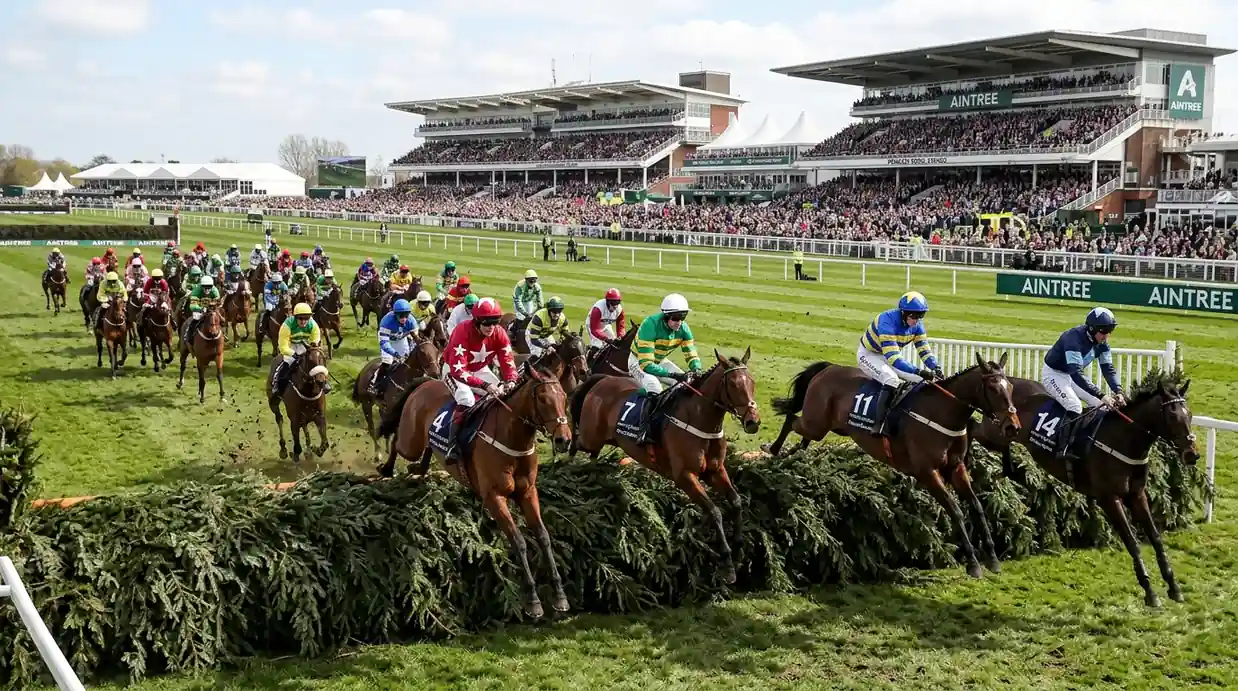
The first time I tried a full trifecta wheel on the Grand National, I nearly bankrupted my betting account. Forty runners meant 1,482 combinations with a single key horse. Even at 50p per combination, the ticket cost £741. I had understood the theory but completely misjudged the practical implications. That expensive lesson taught me that standard wheel approaches simply do not work for the world’s most famous steeplechase. Everything about the race demands adapted strategy.
The Grand National stands alone in British racing. Maximum field size of 40 horses creates combinatorial challenges that exist nowhere else. The course itself adds further uncertainty, with demanding fences that produce more fallers and non-finishers than any comparable race. Standard exotic betting logic breaks down against these factors. What works at everyday meetings requires complete reconstruction for Aintree in April.
The Field Size Challenge
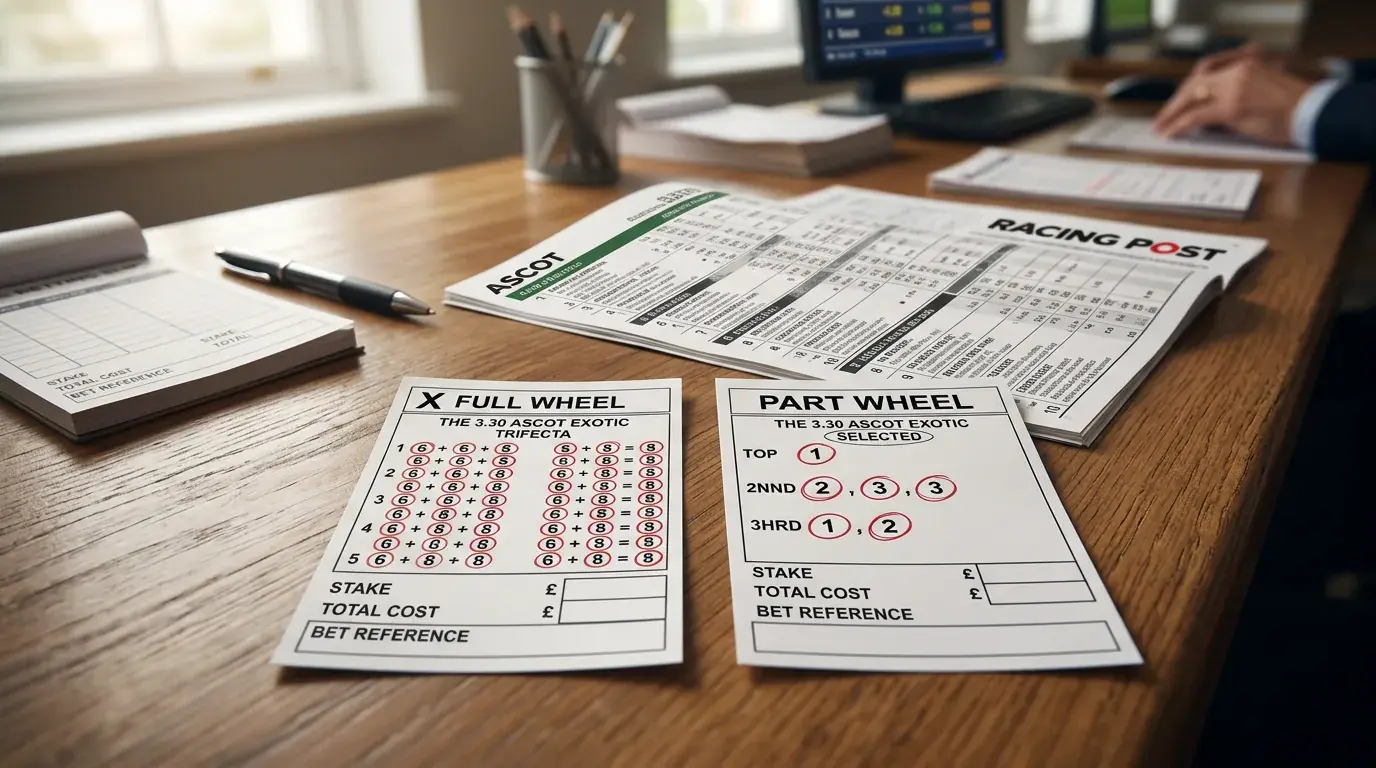
Forty runners changes every calculation. A standard trifecta wheel with one key horse and the field in second and third creates 1,482 combinations. At £1 per combination, that exceeds most punters’ entire annual exotic budget on a single race. Even reducing to 50p per combination produces a £741 ticket. The mathematics make full wheel approaches impossible for recreational bettors.
The problem compounds when you consider the race’s inherent unpredictability. Attrition claims significant portions of the field at various obstacles. Loose horses interfere with others. The pace collapses and accelerates through different sections. What looks like a logical top three at the start might produce an entirely different finish based on in-running events that no form analysis could predict.
This unpredictability makes narrow wheel construction risky despite its cost advantages. Restricting your secondary selections to five or six horses means excluding 34 or 35 runners from trifecta consideration. Given the race’s chaos, at least some of those excluded horses will finish in the frame at substantial prices. You might save money on ticket cost while eliminating the combinations most likely to produce meaningful returns.
The tension between cost control and coverage defines Grand National exotic strategy. Neither extreme works. Full wheels bankrupt you. Overly restricted part wheels miss too many outcomes. The solution lies somewhere between, accepting imperfect coverage while managing exposure to sustainable levels.
Part Wheel Construction Is Essential
Multi-key approaches offer the most practical solution. Instead of keying a single horse to win, use two or three horses as potential winners. Cover four to six for place positions. Accept that you cannot wheel the entire field for third and restrict to horses with proven Aintree credentials or appropriate racing style.
Cheltenham Festival 2024 saw favourites win 7 of 21 races, a 33% strike rate that matches the broader UK average. The Grand National that year went to the favourite, continuing a pattern where market leaders perform reasonably at the Festival despite the challenging conditions. This suggests including at least one strongly fancied horse among your keys, though not relying on favourites exclusively.
Horse selection for Grand National exotics should weight factors the race specifically rewards. Stamina beyond the standard trip matters enormously. Previous Aintree experience, particularly over the National fences rather than the Mildmay course, indicates horses have proven they handle the unique obstacles. Weight carried correlates with performance in ways the official handicap attempts but does not perfectly capture. Front-runners face different challenges than hold-up horses given the race’s long distance and tactical complexity.
My construction approach typically uses three horses keyed across first and second positions, creating six combinations just for those slots. Then I add four to six horses for third position. That produces 24 to 36 combinations at costs between £24 and £36 for a £1 unit stake. Still substantial, but manageable for an annual event that attracts global attention and substantial pool turnover.
Cost Management
The Grand National deserves a specific budget allocation rather than drawing from general exotic funds. I treat it as a separate betting event, setting aside a fixed amount specifically for National exotics. That prevents the race from consuming resources intended for fifty other betting days throughout the year.
Unit stake reduction helps extend coverage without increasing total exposure. Instead of £1 per combination, consider 50p or even 20p if your platform allows. The dividends remain proportional, and you can cover more combinations within your budget. A £741 full wheel at £1 becomes £148 at 20p, suddenly within reach for serious coverage if you judge full wheel value worthwhile.
Superfectas add another dimension but multiply cost problems. Selecting the first four finishers in correct order from a 40-horse field creates over 2 million possible combinations. No wheel approach addresses this realistically. If you want Grand National superfecta exposure, boxing a small group of selections makes more sense than any wheel structure, though the costs remain high and the hit rate vanishingly low.
Pool value often exceeds normal levels for Grand National exotics. The race attracts casual bettors who construct tickets based on sentiment rather than form. Their money inflates the pools beyond what informed analysis would produce. When a logical result occurs, informed bettors share pools subsidised by casual participants. This dynamic sometimes justifies slightly higher stakes than you would deploy at standard meetings.
The comprehensive wheel bet strategy guide covers standard exotic mathematics in detail. Apply those principles with the modifications discussed here specifically for Grand National conditions. The race requires adapted thinking, not abandoned discipline. The foundations remain sound even when the field size demands creative implementation.
Consider also whether Grand National exotics suit your betting style at all. The combination of extreme field size, high takeout, and unpredictable race dynamics means expected value remains negative for most constructions. If you approach the race as entertainment, budget accordingly and accept the cost. If you demand positive expectation, you might conclude that skipping National exotics entirely and focusing on more favourable races makes better mathematical sense.
Whatever your decision, make it deliberately rather than by default. The Grand National creates enormous public attention and pool turnover. The temptation to participate without strategy produces expensive mistakes. Think through your approach well before the April meeting, set your budget, construct your tickets with purpose, and accept whatever outcome follows. That discipline serves you far better than impulsive betting driven by the occasion’s excitement.
How much does a full trifecta wheel cost on the Grand National?
A full trifecta wheel with one key horse in a 40-runner Grand National creates 1,482 combinations. At £1 per combination, the ticket costs £1,482. Even at 50p, the cost is £741. This makes full wheels impractical for most bettors, requiring multi-key part wheel constructions to manage costs while maintaining meaningful coverage.
Do favourites perform differently in the Grand National?
Favourites win the Grand National at roughly similar rates to other races, with the 2024 renewal going to the market leader. The 33% favourite strike rate at Cheltenham Festival overall includes the National. However, the race’s unique demands mean form from other tracks translates less reliably. Include fancied horses but do not rely on market position alone.
Written by the editors at Horse Racing Wheel bet.