UK Tote Betting Guide: Pool Mechanics, Takeout Rates, and Value Analysis
 Available in US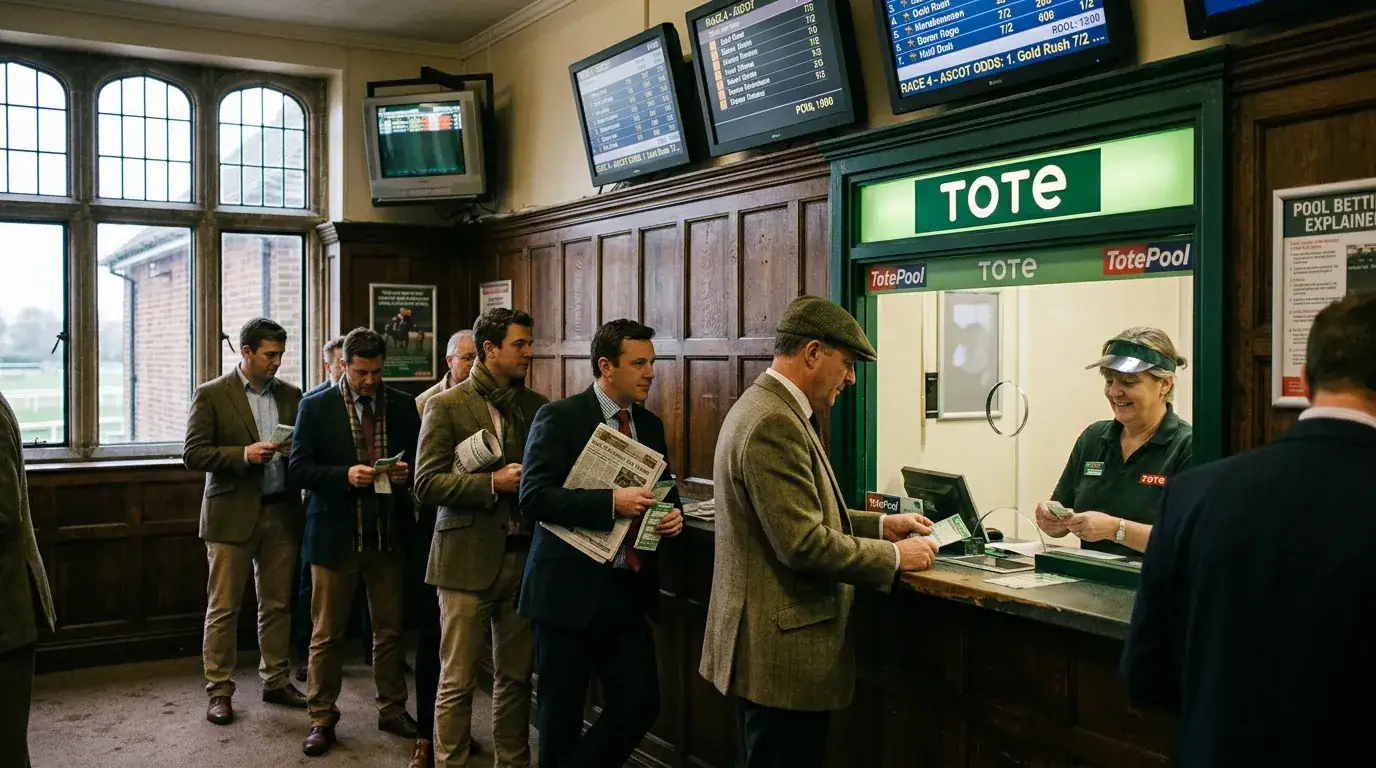
During my years inside Tote operations, I watched the same pattern repeat endlessly. A punter would place an exotic bet through a bookmaker, collect a modest return, then learn hours later that the Tote dividend on the same outcome paid 30% more. The information gap between those who understand pool betting mechanics and those who default to fixed odds represents one of the largest unexploited edges in UK racing.
The Tote operates on principles fundamentally different from bookmaker betting. No odds are set in advance. No trading desk manages liability. Money flows into pools, the house takes its percentage, and the remainder distributes among winners based purely on how betting patterns played out. This mechanical simplicity creates systematic opportunities for punters who understand which races and bet types favour pool betting over fixed alternatives.
UK Tote pools take 25% commission from exacta and trifecta bets, numbers that sound aggressive until you compare actual dividends. Tote+ Exacta beats the Computer Straight Forecast 77% of the time with 21% average value improvement. Tote+ Trifecta outperforms bookmaker tricasts at the same 77% rate but with 50% additional value. The takeout percentage tells only part of the story.
What follows demystifies the pool betting system that many UK punters use occasionally but few understand deeply. The mechanics are not complicated once explained, and the strategic implications reshape how you approach exotic betting on British racing.
How Tote Pool Betting Actually Works
The Tote pools money rather than offering fixed prices. Every stake enters a collective pot. After the race, the house deducts its commission percentage, and the remaining money divides among winning tickets in proportion to their stake. No predetermined odds exist. Your return depends entirely on how others bet relative to you.
Consider a simplified Win pool example. Total stakes amount to £10,000. Horse A receives £6,000 in bets. Horse B receives £3,000. Horse C receives £1,000. The Tote deducts its percentage, say 13.5% for the Win pool, leaving £8,650 to distribute. If Horse C wins, that £8,650 divides among the £1,000 worth of tickets backing Horse C. Every £1 ticket receives £8.65 return.
The beauty and curse of this system is its absolute dependence on betting patterns. If the public overloads one horse, that horse pays poorly when winning. If the public ignores a horse, that horse pays handsomely. You are not betting against the house’s assessment but against the collective judgment of other bettors.
Exotic pools function identically but across multiple outcomes. An Exacta pool collects all forecast bets on a given race. If £50,000 enters the pool and £2,000 backs the winning combination, after 25% takeout the £37,500 distributes among those £2,000 in winning tickets. Each £1 unit receives £18.75. Had only £500 backed the winner, each unit would receive £75.
Pool betting originated with the pari-mutuel system developed in France during the 1860s. The term literally means mutual stake in French. The Tote brought pari-mutuel betting to Britain in 1928, initially as a monopoly operation at racecourses. Modern Tote pools aggregate bets from racecourse terminals, high street shops, telephone betting, and online platforms into unified pools.
Understanding this foundation reshapes exotic betting strategy. Fixed-odds bookmakers set prices based on liability management and margin requirements. Pool betting prices emerge organically from where money flows. When those two mechanisms produce different valuations of the same outcome, arbitrage opportunities appear for punters positioned to exploit them.
Takeout Rates Across Bet Types
Every Tote pool carries a commission rate that determines what percentage the house keeps before distributing winnings. These rates vary by bet type and understanding them helps you assess where pool betting offers structural advantages over fixed odds.
The Win and Place pools carry the lowest takeout at around 13.5%. These straightforward bets compete directly with bookmaker prices and the value comparison becomes straightforward: does the Tote dividend exceed the bookmaker SP or not? On short-priced horses, bookmakers often offer slightly better value. On outsiders, the Tote frequently pays more because public money concentrating on favourites inflates outsider dividends.
Exacta pools carry 25% takeout. That quarter of all stakes disappearing before distribution sounds painful until you recognise that bookmaker CSF formulas and fixed-odds forecasts also embed significant margins. The Tote’s transparent deduction actually compares favourably because the remaining 75% distributes purely based on betting patterns rather than bookmaker algorithms.
Trifecta pools operate at the same 25% takeout. The tricast bet type that requires predicting first, second, and third in order produces larger dividends than exactas despite identical commission rates because the additional position reduces the likelihood of anyone holding a winning ticket. Fewer winners sharing the post-takeout pool means larger individual returns.
The Placepot carries 27% takeout, slightly higher than exactas and trifectas. The bet involves picking placed horses across six races on a card, typically the first six races at a meeting. Average Placepot dividends run between £400 and £500 for a £1 stake when results favour smaller payouts, but can explode into five figures when favourites fail across multiple legs. The Cheltenham 2019 Placepot famously paid £182,567 to a £2 stake.
Quadpot and other specialist pools carry varying rates, generally in the 25-30% range. These bets see less volume than the main pools and can produce volatile dividends due to thinner liquidity.
The critical insight is that takeout rates alone do not determine value. A 25% deduction from a pool that consistently pays 30% more than fixed-odds alternatives still represents better value than a 5% margin bookmaker whose prices systematically undervalue your winning outcomes. Compare actual dividends across your betting history rather than theoretical takeout percentages.
The Tote Plus Guarantee
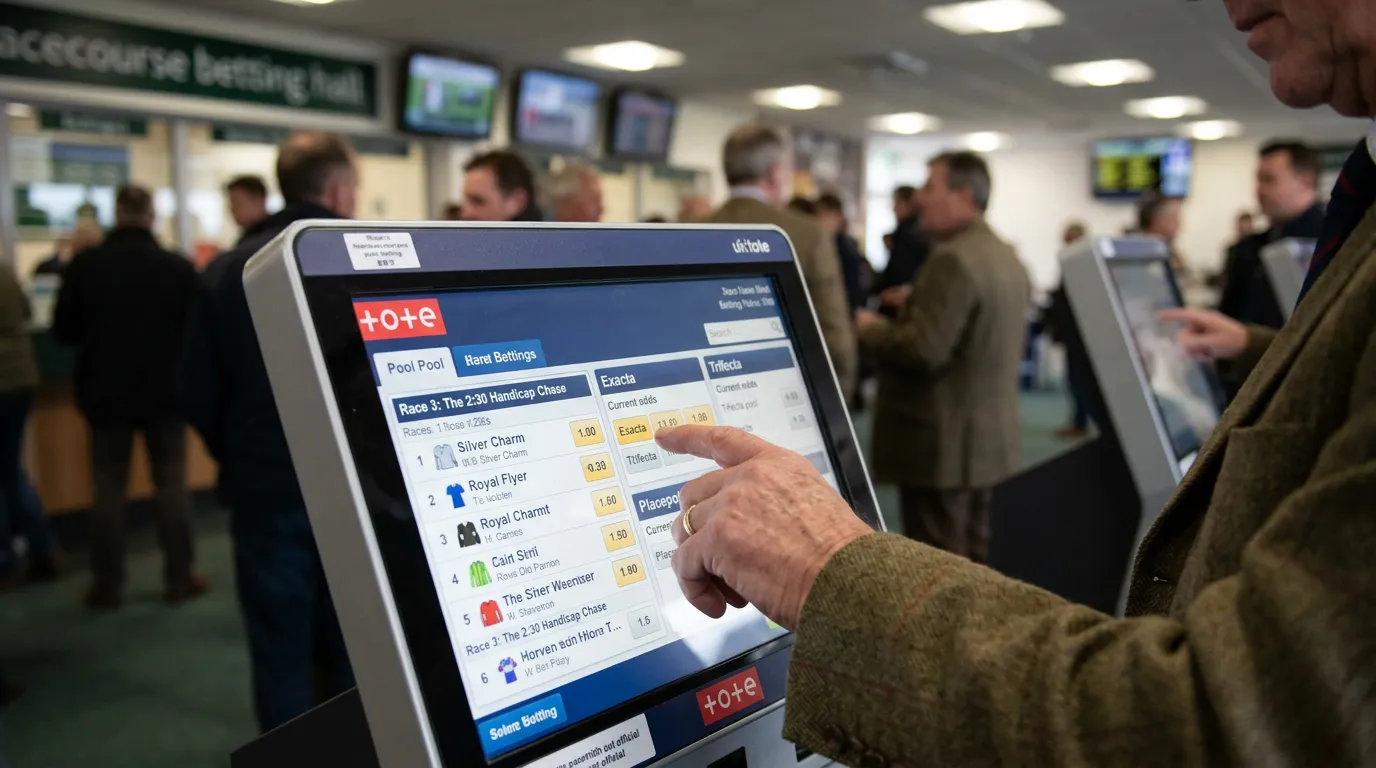
Tote+ represents one of the most underutilised value propositions in UK betting. The guarantee is simple: your exotic bet pays the greater of the Tote pool dividend or the equivalent bookmaker payout, plus a potential enhancement. You cannot lose money choosing Tote over fixed odds, and you frequently gain substantially.
On exactas, Tote+ compares the pool dividend against the Computer Straight Forecast and pays whichever is higher. Data shows Tote+ Exacta beats CSF in 77% of races, delivering 21% more value on average. The 23% of races where CSF would have paid more cost you nothing because the guarantee ensures you receive the CSF dividend anyway.
On trifectas, Tote+ compares against bookmaker tricast formulas. Again, the pool dividend exceeds the formula payout 77% of the time, but here the average value improvement reaches 50%. Half again as much money on more than three-quarters of results, with the guarantee protecting against the minority of races where formulas would have paid better.
The enhancement layer adds further value. On qualifying bets, Tote+ may increase your payout above even the better of pool and formula dividends. Enhancement levels vary by race and pool size but establish that Tote+ is not merely a safety net but an active value creator.
Why does this guarantee exist? The Tote competes against bookmakers offering exotic bets at fixed odds or formula-based returns. Without a compelling value proposition, sophisticated bettors would default to whichever option appeared better at the moment of bet placement. The guarantee removes decision friction while generating volume that sustains pool liquidity.
The strategic implication is clear: route all exacta and trifecta wheel bets through Tote+ unless a specific circumstance dictates otherwise. You capture pool upside when betting patterns favour your outcome while eliminating downside risk when they do not. The mathematical expectation exceeds fixed-odds alternatives by design.
Operational note: Tote+ is available through the official Tote platform and partner bookmakers who offer Tote betting. Ensure your account accesses the genuine Tote pools rather than synthetic equivalents that some operators create. The guarantee only applies to actual pool participation.
Understanding the Placepot
The Placepot occupies a unique space in UK pool betting. Neither a single-race exotic nor a straightforward accumulator, it requires selecting horses to finish placed across six consecutive races at a meeting. The bet has developed a devoted following among punters who appreciate its blend of skill and variance.
Placed means different things depending on field size. In races of 5-7 runners, first and second count as placed. In races of 8 or more runners, first, second, and third qualify. In handicaps of 16 or more runners, first through fourth count. Your selections need not win; they simply need to hit the relevant place positions across all six legs.
The 27% takeout exceeds exacta and trifecta rates, reflecting the multi-leg structure and higher operating complexity. Despite this higher commission, Placepot dividends regularly reach levels that justify significant investment. Average returns cluster between £400 and £500 to a £1 stake on routine days, but exceptional results punctuate the calendar.
The Cheltenham 2019 Placepot remains the benchmark. A £2 stake returned £182,567 when results across six Festival races aligned in ways that eliminated most of the pool’s tickets. These outcomes require favourable results across multiple races simultaneously, making them rare but not impossible.
Strategic Placepot construction resembles trifecta wheel building. You select multiple horses per leg to increase coverage while managing total combination counts. Two selections in each of six legs produces 64 total combinations. At £1 per combination, that Placepot costs £64. Three selections in three legs and two in the other three produces 108 combinations at £108.
The skill element involves identifying which races suit which coverage depth. Races with standout favourites might need only one selection, preserving combination budget for competitive races where broader coverage prevents elimination. Bankers across multiple legs reduce combinations substantially but introduce single points of failure.
One structural observation: Placepot success correlates with disciplined elimination rather than ambitious coverage. The punters who consistently profit from Placepots are those who can identify which horses definitely will not place rather than those who try to include every possibility. Fewer combinations at meaningful stakes outperform scattered coverage at minimal stakes.
Tote Versus Fixed Odds Betting
The comparison between Tote pools and fixed-odds bookmakers extends beyond simple dividend comparisons. The two systems operate on fundamentally different principles, and understanding those differences helps you choose the right mechanism for each betting situation.
Fixed-odds bookmakers set prices based on liability management. They offer odds that guarantee profit regardless of outcome, adjusting prices as money arrives to balance books. The odds you accept at bet placement are the odds that determine your return. No subsequent activity affects your potential payout.
Tote pools determine returns after the race based on actual betting patterns. Your potential payout remains unknown until the pool closes and results finalise. The uncertainty cuts both ways: unexpectedly large dividends occur when you back overlooked outcomes, but disappointing dividends result when public money piles onto your selection.
Remote betting on UK racing produced Gross Gambling Yield of £766.7 million in the 2024-25 financial year. The vast majority of that volume flows through fixed-odds channels rather than pools. This concentration creates opportunities. When public money overwhelmingly backs favourites through bookmakers while Tote pools remain comparatively lighter, pool dividends on alternatives inflate.
Win betting on short-priced horses generally favours fixed odds. Best Odds Guaranteed promotions mean you receive SP if it exceeds your bet price, while Tote Win pools on heavy favourites often pay worse than SP due to recreational punters loading money onto obvious choices.
Exotic betting inverts this pattern. Bookmaker exotic payouts derive from formulas that systematically undervalue unusual outcomes. Pool exotics pay based purely on where money landed. When your exotic wheel captures an outcome that public money ignored, the pool mechanism rewards your contrarianism more generously than any formula.
The Tote+ guarantee makes the exotic comparison asymmetric. You capture pool upside without pool downside. No equivalent protection exists in the opposite direction. A bookmaker will not pay you the Tote dividend if it exceeds their formula payout. The one-way guarantee establishes clear preference for Tote routing on forecasts and tricasts.
Seasonal and meeting-specific patterns affect the comparison. Major festivals generate larger pools with more stable dividends. Midweek cards at smaller tracks produce smaller pools where individual bets can move indicative dividends substantially. Match your routing to pool conditions rather than applying blanket rules across all racing.
When to Place Your Pool Bets
Pool betting timing matters in ways that fixed-odds betting does not. Your return depends on final pool composition, and pools evolve throughout the betting window as money arrives. Strategic timing can improve your expected returns.
Anne Lambert, speaking in her capacity as Interim Chair of the Horserace Betting Levy Board, noted that yield levels around £108 million provide reassurance for industry spending decisions. That yield derives ultimately from betting activity, and understanding how that activity distributes across time helps you position your pool bets optimally.
Early pools are thin. Indicative dividends displayed hours before post time can shift dramatically as money arrives closer to the race. A Tote Exacta showing 50/1 on a particular combination at 11am might settle at 25/1 by post time as late money floods in. Placing bets early locks you into final dividends you cannot predict from early indicators.
Late betting concentrates heavily. The final 30 minutes before a race attracts the majority of pool money, particularly on bigger meetings. Casual punters bet reactively to coverage and publicity. Serious money often waits for late scratches, going changes, and market signals before committing. Pool composition 30 minutes out more closely resembles final composition than pool composition two hours out.
The optimal timing window balances information quality against execution risk. I generally place exotic pool bets 15-30 minutes before post time. This window allows me to see pool compositions approaching their final shape while preserving enough time to resolve any technical issues with bet placement. Closer to post risks platform delays or errors that prevent bet completion.
Large stakes demand earlier placement. If you are betting amounts that might materially influence pool dividends, betting too late can work against you. Your own money inflating a pool reduces your return if you win. On smaller pools at minor meetings, significant bets should arrive earlier to allow the pool to absorb and potentially attract counter-money before closing.
Placepots and other multi-race pools require different timing consideration. These bets need placement before the first leg runs. You cannot wait until the final race to assess pool composition. For Placepots, I balance early placement that locks in positions against the risk of scratches and non-runners affecting my selections.
Market movement provides useful signals even for pool betting. Sharp late money hitting a bookmaker price often correlates with that horse attracting disproportionate pool money too. If you see a 14/1 shot steaming into 8/1 in the final minutes, expect pool dividends involving that horse to compress as well.
Using Tote for Exotic Wheel Bets
Exotic wheels and Tote pools form a natural partnership. The wheel structure spreads coverage across multiple combinations while the pool mechanism rewards outcomes that defy public expectations. When your wheel captures a result that most bettors missed, the pool dividend amplifies your return beyond what fixed-odds formulas would provide.
The Levy Board collected record receipts of £108.9 million in 2024-25, a figure that depends on the continued vitality of betting markets including pool betting. That record collection occurred despite challenging conditions in the broader betting market, suggesting that punters who understand pool mechanics continue finding value.
Route exacta wheels through Tote by default. The Tote+ guarantee eliminates any risk that pool dividends underperform formula alternatives while capturing the 77% of instances where pools pay better. Your wheel construction approach need not change; only the execution channel shifts.
Trifecta wheels benefit even more from Tote routing. The 50% average value improvement over bookmaker tricasts compounds meaningfully across wheel combinations. A 60-combination trifecta wheel where one combination wins at 50% above formula value adds substantial profit compared to the same wheel placed at formula prices.
Consider pool size when sizing wheel stakes. Major meetings generate exacta pools exceeding £100,000 and trifecta pools above £50,000. Your individual wheel barely registers against those totals. Minor meetings might see exacta pools of £10,000 or less, where a £500 wheel represents 5% of the pool. At that scale, your bets influence your own dividends.
Festival meetings offer optimal wheel conditions. Pool sizes accommodate significant stakes without material self-influence. Recreational money inflates pools while often concentrating on obvious combinations that sophisticated wheel constructors avoid. The combination of liquidity and public pattern predictability creates value for disciplined exotic bettors.
Midweek racing at smaller tracks requires more caution. Thinner pools produce volatile dividends. A combination showing 100/1 indicatively might settle at 40/1 if late money arrives, or explode to 200/1 if it does not. The Tote+ guarantee provides protection against the downside scenarios, but managing your position size relative to pool depth helps avoid unfavourable execution.
One final observation: many punters who use Tote for win and place betting overlook its exotic offerings. If your betting already includes Tote accounts and familiarity with pool mechanics, extending that expertise to exacta and trifecta wheels represents a natural evolution. The value opportunity is not hidden; it simply requires attention to capitalise upon.
Pool Betting as a Strategic Advantage
The Tote represents more than an alternative betting channel. It offers structural advantages for exotic bettors willing to understand its mechanics and adapt their execution accordingly. The 25% takeout on exactas and trifectas sounds steep until you compare actual dividends against fixed-odds alternatives and discover that pool betting consistently pays better.
Tote+ eliminates the historical objection to pool betting: uncertainty about whether you are getting better or worse value than fixed odds. The guarantee ensures you never receive less than you would have through traditional channels while capturing upside when pools favour your outcome. The one-way protection makes Tote the rational default for exotic execution.
For detailed construction methods on the wheel bets themselves, the complete wheel bet mathematics guide covers exacta, trifecta, and superfecta formulas that apply regardless of which execution channel you choose.
How does Tote pool betting differ from fixed-odds betting?
Tote pools collect all stakes and distribute them among winners after deducting commission. Your return depends on how others bet. Fixed-odds betting locks in your price at bet placement regardless of subsequent activity. Pools reward contrarian outcomes; fixed odds provide certainty.
What is the Tote+ best odds guarantee?
Tote+ pays the higher of the Tote pool dividend or the equivalent bookmaker formula payout, plus potential enhancements. On exactas, this beats CSF 77% of the time with 21% more value on average. On trifectas, it beats bookmaker tricasts 77% of the time with 50% more value. You never receive less than formula payouts.
Why is the Placepot takeout rate higher than exacta?
The Placepot carries 27% takeout compared to 25% for exactas because it spans six races with more complex administration. The higher rate reflects operational costs and the multi-leg structure. Despite higher takeout, Placepot dividends frequently reach substantial levels because fewer tickets survive all six legs.
Can I use Tote for wheel bets on all UK meetings?
Tote pools are available on most UK flat and jumps meetings, but coverage varies. Premier meetings always carry full exotic pools. Smaller meetings may have thinner pools or limited exotic offerings. Check Tote availability before constructing wheels, particularly for midweek cards at minor tracks.
Published by the Horse Racing Wheel bet team.