Wheel Bet vs Box Bet: Which Exotic Strategy Fits Your Bankroll
 Available in US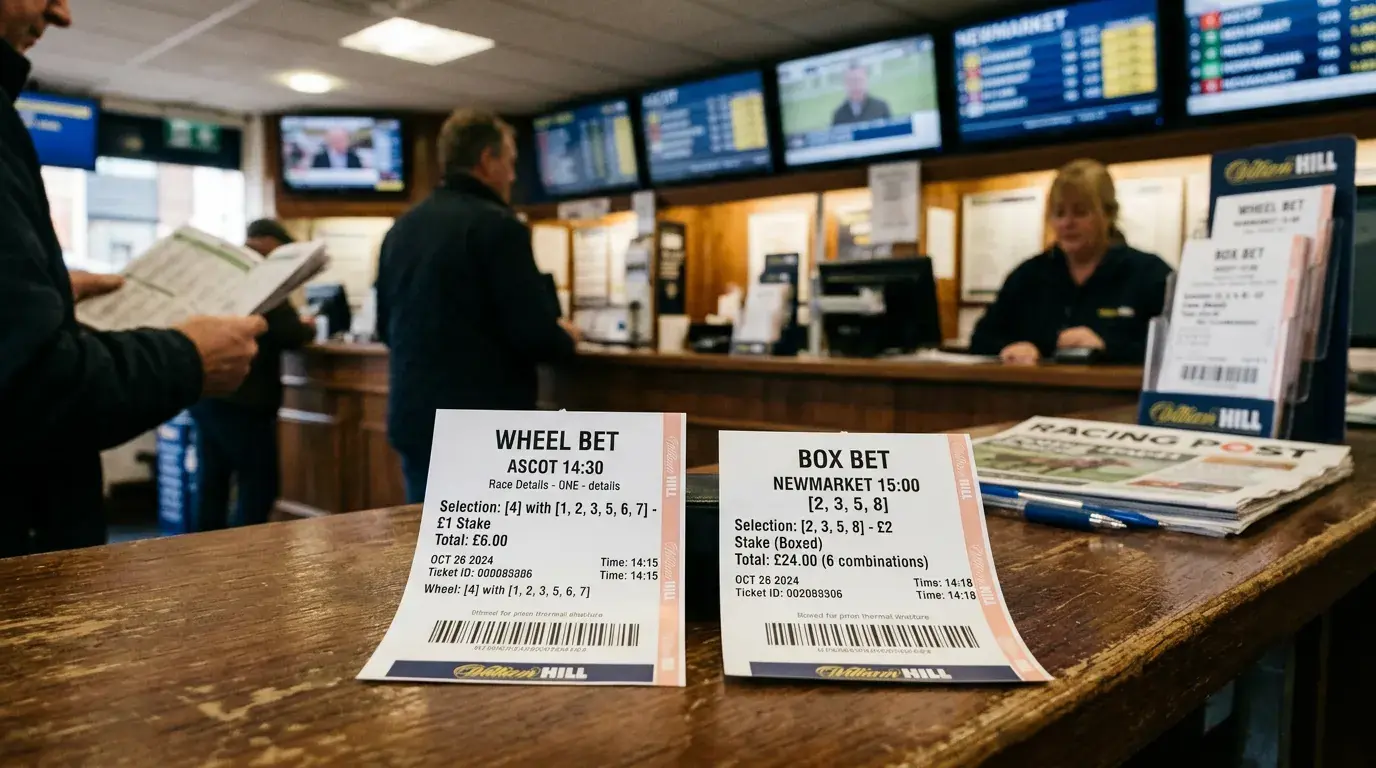
The argument started, as these things often do, over a pint after racing. My friend insisted boxes were superior because they covered more outcomes. I countered that wheels offered better value when you had genuine opinions. Neither of us convinced the other, but the debate highlighted a fundamental question every exotic bettor must answer: do you have a view, or are you simply hoping for luck?
Wheels and boxes represent fundamentally different betting philosophies. One rewards conviction. The other hedges against uncertainty. Understanding which approach suits your situation, on any given race, determines whether you extract value or simply donate to the pool. Most punters default to one method without considering the alternative, and that rigidity costs them money over time.
My experience working with Tote operations showed me the mathematics behind both approaches. What follows is not abstract theory but practical guidance drawn from years of observing how these bets perform across thousands of races.
Table of Contents
Structural Differences
A wheel bet anchors one or more horses in specific positions, then covers multiple possibilities for the remaining slots. You are making a statement: this horse wins, or this horse finishes second, or this horse completes the trifecta. The wheel builds combinations around that conviction. If your anchored selection fails to hit its designated position, the entire structure collapses.
A box bet treats all selected horses equally. You choose three, four, or five runners and cover every possible finishing order among them. There is no hierarchy of opinion. The box says: some combination of these horses will fill the required positions, though I cannot tell you which one. The flexibility comes at a cost. More combinations mean higher stakes for the same potential return.
Consider a trifecta in a 10-runner race. Boxing four horses creates 24 combinations. Wheeling one horse to win with three others in second and third creates 6 combinations. The box costs four times as much. That multiple represents the price of not having an opinion about which horse leads the finish. When favourites win 30% to 35% of races, you are paying substantial premium to avoid taking a position on a question where informed judgement offers genuine edge.
The structural distinction extends to how these bets perform when you are partially correct. If you box four horses and the winner falls outside your selection, you lose everything. If you wheel one horse to win and it finishes second instead, you lose everything. Neither approach forgives fundamental analytical error. The difference lies in which type of error they protect against. Boxes guard against wrong finishing order among your selections. Wheels guard against excluding horses from secondary positions.
Cost Comparison Table
The mathematics becomes stark when you lay out the numbers. Average flat field sizes in 2025 sit at 8.9 runners, giving us a practical baseline for comparison. I will use a 9-runner field to illustrate the cost differentials across bet types.
For an exacta, boxing three horses costs 6 combinations. Wheeling one horse to win with two others creates 2 combinations. The box costs three times more. In practice, this might mean £12 versus £4 at a £2 unit stake. The box says any of your three horses might win. The wheel says you know which one wins but cannot decide between two for second place.
Trifectas amplify the difference. Boxing four horses creates 24 combinations. Wheeling one horse to win, picking two for second, and using the remaining runners for third might create 8 combinations. The box costs three times as much while essentially admitting you have no view on any position. The wheel structure costs less and extracts value from whatever genuine insight you possess.
The Grand National demonstrates extreme cases. With 40 runners, boxing just four horses for a superfecta creates 24 combinations. Wheeling one horse to win with three others and the field fills the remaining positions could create hundreds of combinations. Neither approach handles such large fields elegantly, which is why part wheels with multiple keys become essential at festivals. The trifecta wheel guide covers these advanced constructions in detail.
Superfectas show the most dramatic cost divergence. Boxing five horses for a superfecta costs 120 combinations. Wheeling one horse to win with two in second, two in third, and the field in fourth reduces combinations substantially while maintaining reasonable coverage. The arithmetic consistently favours wheels when you hold any positional opinion whatsoever. Boxes only make economic sense when you genuinely believe all selected horses have identical chances in every position, which rarely reflects reality in racing.
Scenario-Based Choice
The famous racing analyst Steve Crist simplified exotic wagering complexity better than anyone in the sport. His approach always emphasised having genuine opinions rather than covering for their absence. That philosophy guides my scenario selection between wheels and boxes.
Wheels suit races where you hold strong views. You believe a horse wins. You think two others are clearly second-best but cannot separate them. The wheel structure perfectly captures that opinion hierarchy. You pay for positions where your view is strong and spread coverage where uncertainty exists. The cost reflects your actual confidence level rather than blanket hedging.
Boxes suit races where you identify contenders but cannot establish hierarchy. Competitive handicaps with eight to ten horses separable by a length on form sometimes fall into this category. You know the winner comes from a subset of the field but genuinely cannot position them. Boxing that group costs more but accurately represents your analytical state. Forcing a wheel structure when you lack positional conviction leads to frustration when your key horse finishes second behind a horse you had in secondary slots.
Budget constraints favour wheels regardless of race type. If you have £20 for exotic bets on a six-race card, wheeling allows meaningful coverage across multiple races. Boxing concentrates that money into fewer opportunities. Given the inherent variance in exotic betting, spreading selections across more races typically produces better outcomes than loading into a single box that requires multiple correct opinions to succeed.
My personal approach defaults to wheels and uses boxes only when I genuinely cannot establish any positional preference among my selections. That happens perhaps once per month. Most races offer enough information to form at least a preliminary view about win probability, and that view deserves expression through wheel structure rather than equal-weighting through boxes.
The discipline required is simple: before placing any exotic bet, ask whether you can rank your selections. If you can, wheel. If you truly cannot, box. Most punters box out of laziness rather than genuine analytical paralysis, and that lazy default erodes bankroll steadily across a season.
Is a box bet ever cheaper than a wheel?
A box is never cheaper for the same coverage. Boxes cost more because they cover every finishing permutation among selected horses. A trifecta box of four horses always costs 24 combinations. A wheel with one key horse and three others in remaining positions costs far fewer combinations while still capturing most realistic outcomes.
Can I combine wheel and box in one ticket?
Most betting platforms allow combination bets that blend approaches. You might key one horse to win, then box three others for second and third. This hybrid captures strong conviction in first place while acknowledging uncertainty in minor positions. The cost falls between pure wheel and pure box structures.
Published by the Horse Racing Wheel bet team.