Exotic Bet Bankroll Management: Protecting Capital on Wheel Bets
 Available in US
The email from my betting account showed the damage: £1,200 lost across three weeks of undisciplined exotic betting. No single catastrophic loss, just a steady erosion from chasing, over-staking, and abandoning every principle I thought I understood. That period taught me that exotic betting without bankroll discipline is not betting at all. It is accelerated wealth destruction with extra steps.
Wheel bets and exotic wagers amplify both opportunity and risk compared to straight betting. The combination structures that create potential for substantial returns also multiply the ways to lose. UK racing turnover has dropped 10.3% since 2023, partly reflecting bettors exiting after painful experiences. Many of those exits followed bankroll management failures rather than selection failures. The mathematics of exotic betting punishes undisciplined capital deployment with brutal efficiency.
Table of Contents
Unit Sizing for Exotic Bets
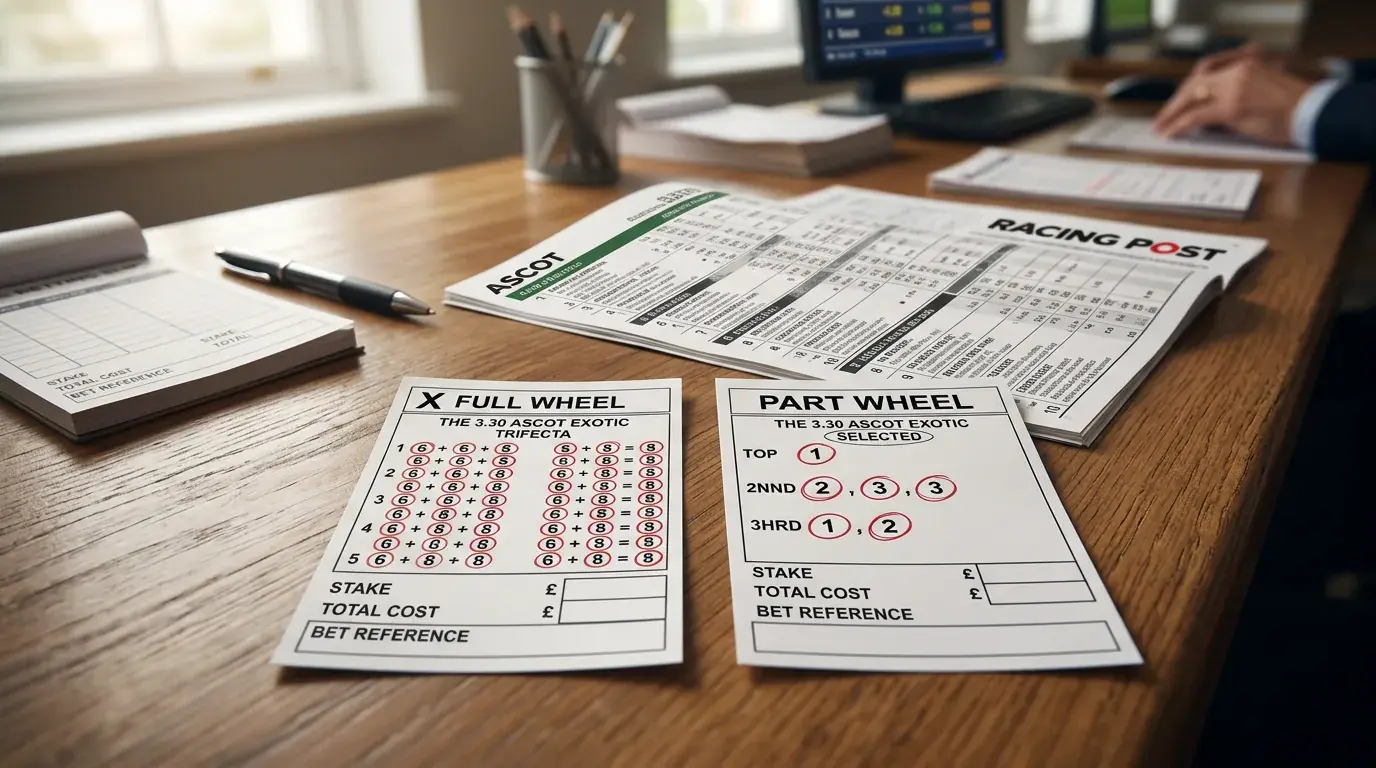
Standard betting advice suggests risking 1% to 2% of your bankroll per bet. Exotic betting requires modification because the bet structures themselves vary so dramatically in exposure. A £10 exacta wheel might create 9 combinations at £90 total stake. A £10 trifecta box might create 24 combinations at £240. Treating both as equivalent would ignore the actual risk each represents.
My approach sizes exotic bets by total ticket cost rather than individual combination stakes. Set a maximum exotic ticket cost that represents 2% to 3% of your dedicated exotic bankroll. If you have £500 allocated to exotic betting, no single ticket should exceed £10 to £15 total. That constraint forces discipline in wheel construction, preventing the coverage creep that turns modest positions into bankroll-threatening exposures.
The declining turnover across UK racing reflects many factors, but affordability pressures clearly contribute. Bettors who sized positions poorly during the boom years discovered the consequences during leaner periods. Those who maintained disciplined unit sizing weathered the same market conditions with bankrolls intact. The difference was not luck or selection skill. It was capital management.
Exotic bets should form a minority of your overall betting activity regardless of how you size them. My personal allocation dedicates roughly 20% of total betting bankroll to exotics, with the remainder on straight win and place bets. That proportion might suit some bettors while others prefer 10% or 30%. The exact figure matters less than having a figure at all and respecting it consistently.
Session Limits
Race day sessions require their own limits beyond per-bet sizing. Simon French, who runs a prominent owner services company, identified the core challenge when discussing industry changes: the biggest concern is not that restrictions drive people away, but how to get them back once they leave. That observation applies perfectly to individual bankrolls. Once depleted, exotic betting funds take substantial time to rebuild.
Daily loss limits prevent single sessions from destroying weekly or monthly allocations. Set a figure that ends your exotic activity for the day once reached, regardless of remaining races on the card. My limit sits at 5% of exotic bankroll per day. Six losing sessions would consume 30% of capital, serious damage but not fatal. Without limits, a single bad afternoon could do far worse.
Win limits receive less attention but serve important purposes. Define a point at which you reduce stakes or stop for the session after profitable activity. This prevents the winner’s fallacy where early success leads to progressively larger bets until the original profit and more disappears. Locking in some portion of winning sessions maintains positive momentum that compounds over time.
Session limits interact with race card structure. A six-race card divides daily allocation into roughly six opportunities. A ten-race all-weather evening card spreads the same allocation thinner. Adjust expectations based on what the card offers rather than forcing the same approach onto different situations. Some days warrant full engagement. Others deserve minimal activity or complete abstention.
Recovery Discipline
The worst bankroll management failures occur during recovery attempts. Losses create psychological pressure to recoup. That pressure drives larger stakes, looser selection criteria, and abandonment of the systems that would have prevented the losses initially. Breaking this cycle requires advance commitment to recovery protocols.
After losing sessions, reduce stakes rather than increasing them. The standard response, betting more to recover faster, mathematically increases the probability of further loss during an already negative variance period. Cutting stakes preserves remaining capital for the inevitable return to positive results. The recovery takes longer but actually completes rather than accelerating toward total depletion.
Set recovery targets by percentage rather than absolute amounts. Rebuilding a 20% drawdown means returning to previous levels, not generating specific pound figures. This framing prevents the mental trap of chasing a number that feels increasingly distant as losses compound. Focus on sustainable activity that eventually restores the bankroll rather than dramatic bets attempting to skip the recovery process entirely.
Some drawdowns require honest reassessment rather than recovery attempts. If your exotic betting shows consistent losses across months of activity, the problem might be selection methodology rather than variance. In those cases, reducing exotic activity or pausing entirely while studying approach makes more sense than throwing additional capital at a losing strategy. The wheel bet strategy fundamentals provide the analytical framework that consistent exotic profitability requires.
Document everything. Keep records of every exotic bet including construction, stakes, results, and running bankroll totals. This data enables honest assessment of what works and what fails. Without records, selective memory creates false narratives about your betting success. With records, the numbers tell the truth regardless of how you feel about it.
Spreadsheet tracking need not be complex. Date, race, bet type, construction, stake, result, return, and running total covers the essential information. Review monthly to identify patterns. Are certain bet types consistently profitable while others bleed money? Do particular race types or courses produce better results? The answers guide future allocation in ways that intuition alone cannot match.
Bankroll management lacks the excitement of selection and the satisfaction of collecting winners. Nobody celebrates implementing stop-losses or staying disciplined through losing runs. But survival precedes success in exotic betting as in most endeavours. The bettors still active after years of exotic wagering almost universally cite capital discipline as the foundation of their longevity. Those who burned out blamed selections, markets, or luck. The real failure was usually bankroll management.
Start today if you have not already. Count your current exotic funds, set your limits, and commit to respecting them. The improvement begins immediately, even if the results take months to demonstrate. Future you will appreciate the discipline that present you implements now.
What percentage of bankroll should go to exotic bets?
Allocate 10% to 20% of total betting bankroll to exotic activity. Within that allocation, no single ticket should exceed 2% to 3% of the exotic-specific bankroll. These limits prevent exotic betting from overwhelming your broader betting activity or any single race from causing disproportionate damage.
How do I set session limits for wheel betting?
Set daily loss limits at roughly 5% of your exotic bankroll. When that limit is reached, stop exotic betting for the day regardless of remaining races. Also set win targets that trigger stake reduction or session ending to lock in profitable days rather than giving returns back through continued activity.
Published by the Horse Racing Wheel bet team.