UK Racing Market Trends: Turnover Decline and Industry Challenges
 Available in US
The numbers arrived quarterly, each report confirming what trackside observers already sensed: something fundamental had shifted in UK racing’s betting landscape. I remember discussing the early signs with colleagues at Tote operations, debating whether the declines represented temporary fluctuation or structural change. Three years later, the answer is clear. UK racing faces a betting environment that has contracted significantly and shows few signs of reversal.
Understanding these market trends matters for exotic bettors beyond abstract industry concern. Turnover affects pool sizes. Pool sizes affect dividend calculations. Regulatory responses to declining markets reshape what bets you can place and under what conditions. The broader context of UK racing’s challenges directly influences your exotic betting experience whether you follow industry news or not.
Turnover Decline Data
Total betting turnover on UK racing fell 4.3% in 2025, continuing a pattern that has produced a 10.3% cumulative decline since 2023. The first quarter of 2025 showed particularly sharp contraction, down 9% compared to the same period in 2024. These are not rounding errors or seasonal adjustments. They represent genuine market shrinkage across the sport.
The declines distribute unevenly across fixture types. Average turnover per race at Premier fixtures, the highest-quality meetings, actually rose 1.1% in 2025. Core fixtures, the everyday bread-and-butter racing, saw average per-race turnover fall 8.1%. The first quarter data for Core fixtures showed an even steeper 14.4% decline. Quality racing maintains betting interest. Routine racing loses it.
Online betting, which transformed the industry over the past two decades, now contributes to its challenges. Online turnover on racing has fallen by £1.6 billion since 2022. Adjusted for inflation, the real decline approaches £3 billion. Digital convenience was supposed to expand the betting market permanently. Instead, the initial expansion has reversed while the high street betting infrastructure it disrupted never recovered.
Multiple factors explain the contraction. Affordability checks imposed by the Gambling Commission have limited stake sizes for many regular bettors. Competition from other betting products, particularly football and in-play markets, diverts attention from racing. Fewer horses in training means smaller fields and less attractive betting propositions. Economic pressures on household discretionary spending reduce the money available for gambling generally.
Attendance Contrast
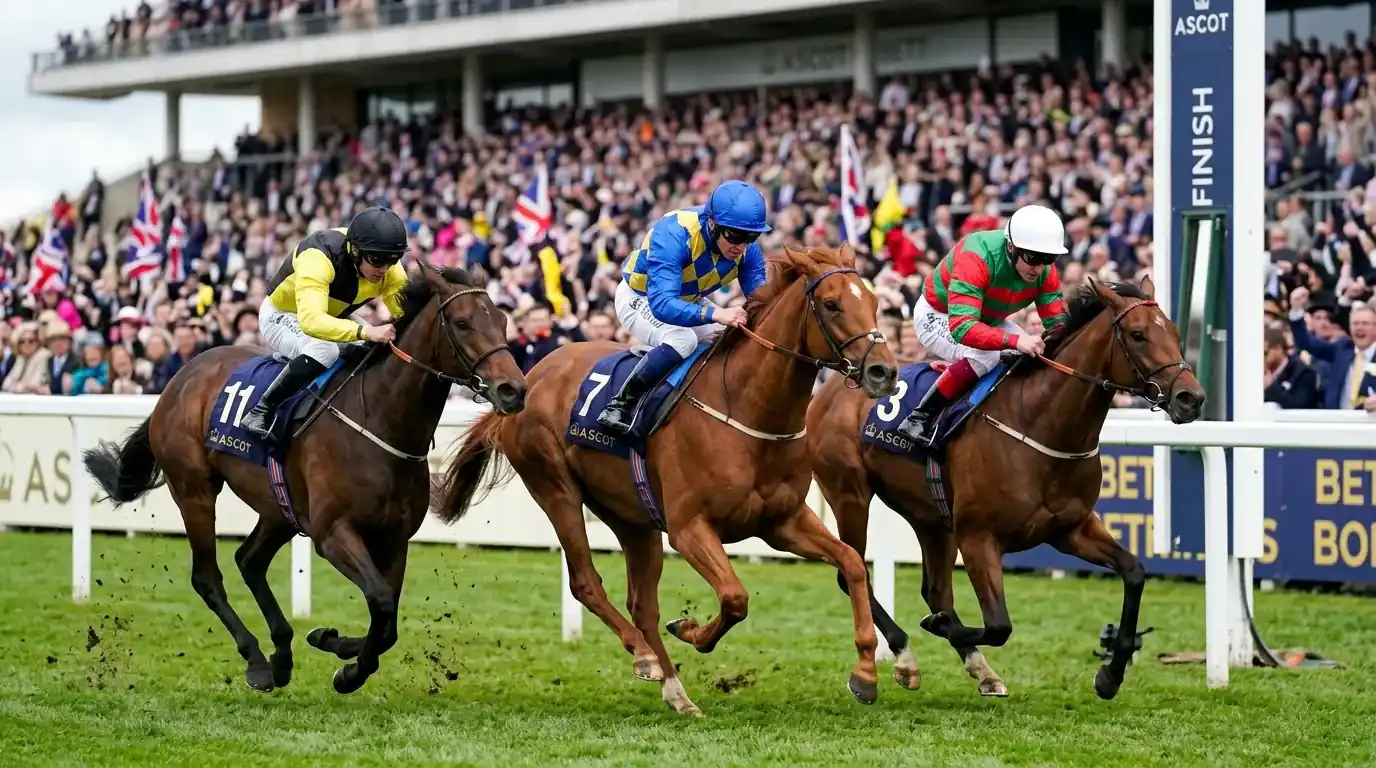
Remarkably, racecourse attendance tells a different story. Visitor numbers exceeded 5 million in 2025, the first time that threshold has been crossed since 2019. Year-on-year growth reached 4.8%. Younger audiences increased particularly strongly, with attendance by those under 18 rising 17% to 211,447 visitors.
This divergence between falling turnover and rising attendance creates a puzzle. More people attend racing than five years ago. Fewer of them bet, or those who bet wager less than their predecessors. The raceday experience apparently offers value independent of betting that previous generations found primarily through the wagering itself.
For pool betting, the attendance-turnover gap matters directly. More people at the track creates atmosphere and entertainment. It does not necessarily create larger pools. Oncourse betting represents a fraction of total turnover, with the vast majority of racing bets placed online or through off-course bookmakers. Those channels show the declines that attendance figures obscure.
The demographic shift toward younger attendees who bet less heavily could reshape racing economics over time. If the sport successfully converts spectators into regular racing followers, future turnover might stabilise. If attendance remains a casual entertainment choice without betting engagement, the industry loses its financial foundation while maintaining its visible audience. Which pattern emerges will determine racing’s trajectory for the next decade.
Implications for Exotic Bettors
Richard Wayman, the BHA’s Director of Racing, acknowledged the situation directly: the horse population continues to decline and the betting environment remains challenging. That combination produces the smaller fields and reduced pools that exotic bettors experience race by race.
Declining turnover affects pool liquidity most obviously. Smaller pools produce more volatile dividends. A few large bets can distort payouts in ways that stable, liquid pools resist. Exotic bettors may find returns less predictable as pools thin, with occasional outlier dividends in both directions replacing the consistent distributions that larger pools generate.
The concentration of betting interest at Premier fixtures creates strategic implications. If you must choose between exotic activity at a Premier meeting or a Core fixture, the Premier meeting likely offers larger pools and more reliable dividend structures. The quality gap that always existed has widened as betting volume increasingly concentrates at elite events.
Regulatory responses to market challenges may further shape exotic betting. Affordability checks that limit stakes for some bettors reduce both turnover and pool contributions. Future regulatory changes responding to continued market contraction could impose additional restrictions. Exotic bettors should monitor regulatory developments as part of ongoing strategy assessment.
The wheel bet fundamentals guide provides construction strategies that work across various market conditions. Sound principles remain sound whether turnover grows or contracts. But applying those principles requires awareness of the environment in which you operate. UK racing’s betting market has changed materially from its recent peak, and exotic betting strategies should account for that reality.
None of this suggests abandoning exotic betting on UK racing. The infrastructure remains robust, the Tote continues operating, and major meetings still attract substantial pools. The challenge is adapting expectations and tactics to a different market reality than existed five years ago. Those who adjust will find continued opportunity. Those who ignore the changed landscape will wonder why their results differ from historical patterns.
The Levy collection reaching £108.9 million in 2024-25, a record since the 2017 reform, shows that racing retains substantial economic activity despite turnover declines. Gross Gambling Yield from remote betting on racing hit £766.7 million in the same period. The numbers confirm that significant money still flows through racing betting. The flow has simply diminished and redirected compared to peak years.
Monitor industry reports as they emerge. The BHA publishes quarterly racing statistics that track these trends. Understanding where the market moves helps anticipate how your exotic betting environment will evolve. The informed bettor responds to change rather than discovering it retrospectively through unexplained results.
The market will eventually find equilibrium at some level, whether higher or lower than current figures. Until that stabilisation occurs, flexibility serves exotic bettors better than rigid adherence to strategies optimised for different conditions. Stay informed, stay adaptable, and stay realistic about what the changed market offers.
Why is UK racing turnover declining?
Multiple factors contribute: affordability checks limiting some bettors’ stakes, competition from other betting products especially football, declining horse population producing smaller fields, and general economic pressures on discretionary spending. Total turnover has fallen 10.3% since 2023 with steeper declines at everyday Core fixtures compared to Premier meetings.
How does turnover affect pool bet dividends?
Lower turnover means smaller pools. Smaller pools produce more volatile dividends because individual large bets represent greater proportions of the total. Exotic bettors may experience less predictable returns compared to periods when pools were larger and more liquid. Concentrating activity at Premier fixtures helps access the remaining pool depth.
Prepared by the Horse Racing Wheel bet editorial staff.