
Flat vs Jump Racing Exotics: Field Sizes and Wheel Bet Opportunities
 Available in US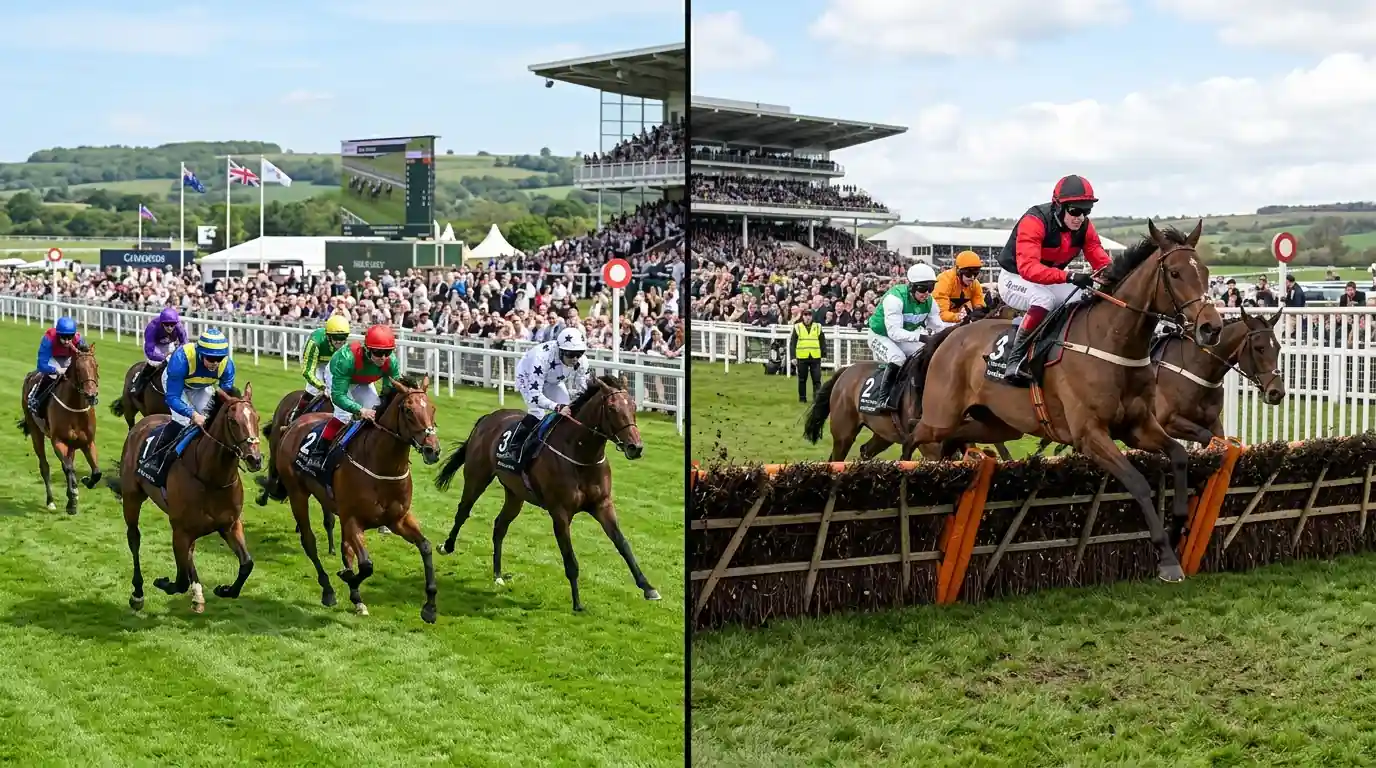
My betting calendar splits cleanly between summer and winter, not by choice but by where exotic value concentrates. Flat racing from April through October offers different opportunities than the jump season running alongside and then dominating through winter. Understanding these code differences shapes when and how I deploy exotic capital. The same analytical principles apply, but field sizes, competitive patterns, and pool dynamics differ enough to require adjusted tactics.
British racing operates two distinct codes with overlapping seasons. Flat racing runs without obstacles on turf during warmer months and all-weather surfaces year-round. Jump racing features hurdles and steeplechase fences primarily through winter, peaking at the spring festivals. Each code presents characteristic exotic betting conditions that reward code-specific approaches rather than uniform strategy.
Field Size Comparison
Flat racing averaged 8.9 runners per race in 2025, down from 9.14 the previous year. Jump racing dropped more sharply, averaging 7.84 runners compared to 8.49 previously. Both codes contracted, but flat racing maintains a meaningful field size advantage that directly affects exotic betting mathematics.
The single-runner difference matters more than it might appear. An 8.9-runner race produces approximately 650 possible trifecta combinations. A 7.8-runner race produces approximately 420. The complexity differential exceeds 50%, meaning flat racing offers substantially more combination variety from which large payouts can emerge. Exotic betting thrives on complexity. Flat racing delivers more of it.
Premier flat fixtures show the strongest fields in British racing. These quality meetings average 10.97 runners, the highest figure across all fixture types. The headline events, including Royal Ascot, Glorious Goodwood, and York’s Ebor meeting, routinely card races with fifteen or more declared runners. For exotic bettors, these fixtures represent premium opportunities that justify calendar planning and budget concentration.
Jump racing’s smaller fields reflect several factors. The inherent attrition of jumping, where falls and unseated riders thin fields during races, means trainers enter fewer horses knowing some will not complete the course. Training jumping horses requires more resources than flat counterparts, limiting the population available. The code also schedules more races relative to its horse population, spreading runners thinner across cards.
Flat Racing Opportunities
The flat season offers exotic bettors a period of enhanced opportunity that the winter months cannot match. Larger fields create more combinations. Predictable going on summer turf reduces one variable. The form book develops comprehensively as horses race repeatedly through the season.
Two-year-old racing presents particular exotic challenges despite attractive field sizes. These inexperienced horses run off limited form, sometimes debuting at meetings where no established evidence guides selection. Early-season juvenile races reward bettors with trainer knowledge and stable information but punish those working purely from the form book. Later in the season, juvenile form becomes reliable enough for standard analysis.
Handicaps dominate flat race cards numerically, creating the competitive uncertainty that exotic betting exploits. The handicapper’s attempt to equalise chances spreads winning probability across fields, making any of several horses plausible trifecta components. This competitive depth produces the dividend potential that justifies wheel bet costs.
Pattern racing, from Listed level through Group 1, offers different exotic conditions. These races feature smaller fields of proven horses with clear class hierarchies. Favourites win more frequently. Exotic payouts compress compared to handicaps. The trade-off favours part wheels with narrow coverage over expensive full wheel structures that the likely dividends would not justify.
Jump Racing Considerations
Jump racing compensates for smaller fields through different value mechanisms. The code’s inherent unpredictability, where any horse might fall or make mistakes, creates uncertainty that field size alone does not capture. A seven-runner steeplechase can produce surprising results through in-running incidents that form analysis cannot predict.
Festival periods concentrate jump racing’s exotic appeal. Cheltenham in March, Aintree in April, and Punchestown immediately following attract fields and betting volumes that rival premium flat meetings. These fixtures justify serious exotic allocation even for bettors who reduce jump activity during ordinary winter cards. The championship events within these festivals combine quality fields with substantial pools.
Going variation affects jump racing more dramatically than flat. Winter ground shifts between soft, heavy, and occasionally frozen throughout the season. Some horses excel in testing conditions while others require better ground. Monitoring going changes and adjusting key horse selection accordingly matters more in jump racing than in the relatively stable conditions of summer flat turf.
The wheel bet strategy guide addresses both codes while emphasising principles that transcend code boundaries. Key horse selection, cost management, and part wheel construction work regardless of whether horses jump or run on the level. The adjustments required involve tactical implementation rather than strategic overhaul.
A balanced exotic portfolio probably includes both codes, weighted toward flat racing during its peak season but maintaining jump presence during the festivals and quality meetings that punctuate the winter calendar. Exclusive commitment to either code misses opportunities the other provides. Flexibility across codes maximises the exotic betting calendar throughout the year.
Track your results separately by code to identify whether your selection methods favour one over the other. Some bettors find flat handicaps suit their analytical approach while struggling with jump racing’s unpredictability. Others thrive in the jump code’s chaos while finding flat racing too formful. Personal data reveals these patterns that instinct alone might miss.
Seasonal transitions require particular attention. The periods when flat and jump racing overlap, primarily autumn and spring, offer maximum fixture choice. Concentrate exotic activity where conditions best suit your approach rather than spreading attention across both codes simultaneously. The discipline to focus produces better results than the diffusion of trying to cover everything.
Each code rewards slightly different selection skills. Flat racing emphasises speed figures, class assessment, and draw analysis on certain tracks. Jump racing prioritises jumping ability, stamina, and going preference. Developing code-specific analytical tools improves results beyond what generic form reading achieves. The investment in understanding each code’s unique characteristics pays returns through better key horse identification.
Neither code dominates the other for exotic betting. Each offers opportunities within its characteristic conditions. The sophisticated exotic bettor adjusts between codes rather than committing exclusively to either. That flexibility expands your calendar of valuable races while maintaining consistent principles of wheel construction and capital management that work across all racing.
Which code offers better exotic bet value?
Flat racing generally offers better exotic conditions due to larger fields averaging 8.9 runners compared to jump racing’s 7.84. Larger fields create more combination complexity and higher potential payouts. However, jump festivals provide excellent exotic opportunities that rival premium flat fixtures, making both codes valuable at different times.
Why are jump racing fields smaller?
Jump racing fields reflect the code’s inherent attrition from falls and mistakes, higher training costs that limit horse populations, and scheduling that spreads available horses across many race cards. The physical demands of jumping also mean horses race less frequently than flat counterparts, reducing runner availability for any given meeting.
Published by the Horse Racing Wheel bet team.