
Online vs Oncourse Betting: Pool Size and Exotic Bet Timing
 Available in US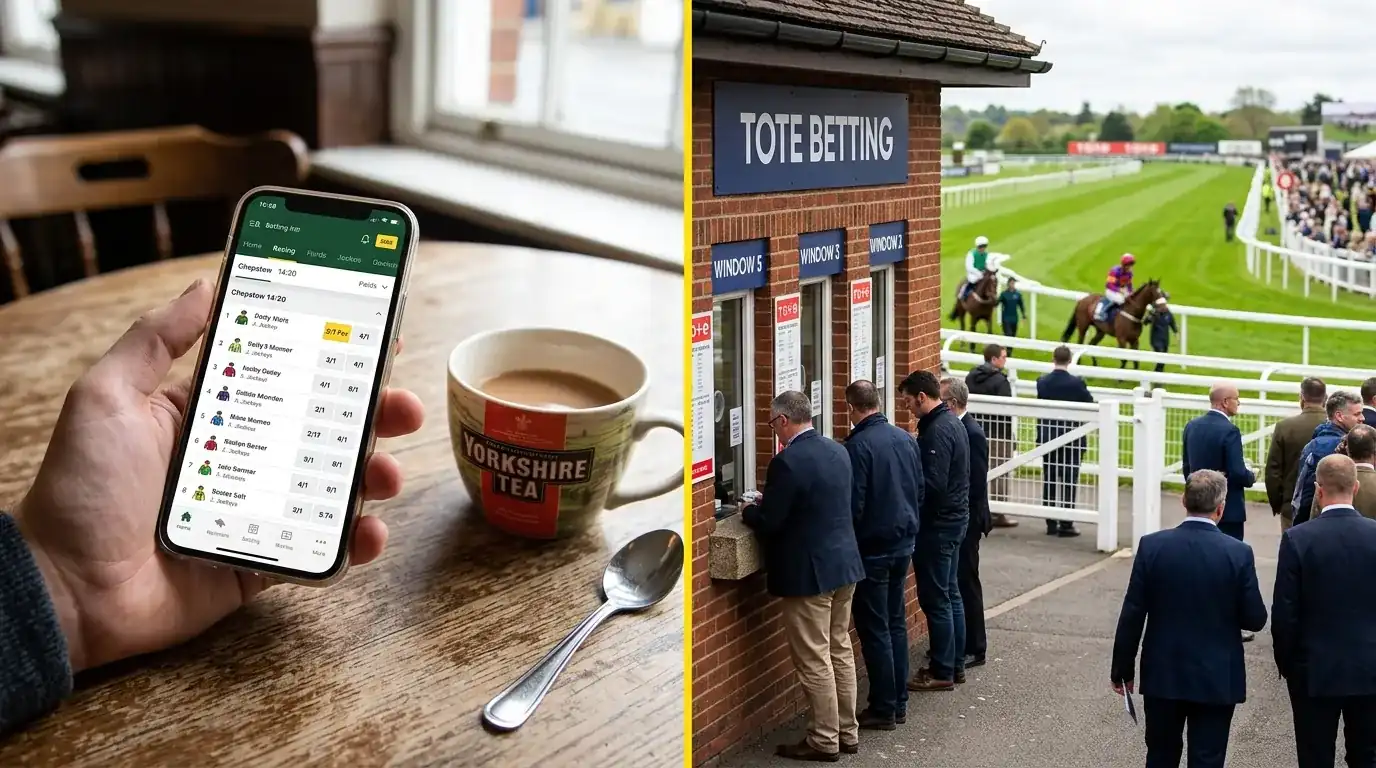
Standing in the Tote queue at Cheltenham, ticket in hand with minutes before the off, I watched the pool display climb. Numbers flickering upward as last-minute money flooded in. The experience differs fundamentally from placing the same bet online hours earlier. Where you bet and when you bet interact with pool dynamics in ways that affect your exotic returns. Understanding these interactions helps optimise both channel choice and timing strategy.
The shift toward online betting has transformed UK racing over two decades. What once required physical presence at racecourses or betting shops now happens from anywhere with internet access. This convenience came with consequences for pool composition, dividend behaviour, and the overall betting ecosystem. For exotic bettors, both channels remain available, each with distinct characteristics worth understanding.
Table of Contents
Turnover Shift
Online betting turnover on racing has fallen by £1.6 billion since 2022. Adjusted for inflation, the real decline approaches £3 billion. This contraction represents a fundamental change from the years when online growth seemed inexorable. The digital channel that disrupted traditional betting now faces its own disruption from regulatory pressure and changing consumer preferences.
Racecourse attendance tells a different story. Over 5 million visitors attended UK tracks in 2025, the highest figure since 2019 and a 4.8% increase from the previous year. More people come to racing. Fewer of them bet, or those who bet do so through channels that increasingly avoid the regulated market. The attendance-turnover divergence creates an unusual market structure.
Pool composition reflects these shifts. Online bets placed hours or days before races contribute to pools that then receive additional oncourse money closer to post time. The balance between early online money and late oncourse money affects how dividends develop. Pools dominated by early money may move differently than those that receive substantial last-minute oncourse contributions.
The channel mix also affects pool efficiency. Online bettors often rely on form study completed well before betting closes. Oncourse bettors may access fresh information from paddock inspection, market moves, and course conditions. The information sets differ, creating potential value gaps for those who understand what each channel contributes to the market.
Pool Size Impact
Pool size matters for dividend stability. Large pools absorb individual bets without significant distortion. Small pools can see dividends swing dramatically based on a few large wagers. The decline in online turnover has reduced total pool sizes at many meetings, making dividend volatility a more frequent concern.
Premier meetings maintain substantial pools because their quality attracts betting interest despite market-wide declines. A Cheltenham Festival exacta pool might contain hundreds of thousands of pounds. At that scale, individual bets disappear into the aggregate. Your £50 wheel neither distorts nor is distorted by the pool’s composition. The dividend you receive reflects genuine market assessment of the winning combination’s likelihood.
Core fixture pools face greater vulnerability. A quiet Wednesday afternoon meeting might attract modest pool participation. Large bets from a single bettor could represent meaningful portions of the total. Dividends may disappoint or surprise based on factors beyond combination probability. The pool functions less efficiently as a market mechanism when participation thins.
The Tote guarantee on exacta and trifecta bets provides protection against pool distortion working against you. If the pool would pay less than Computer Straight Forecast or Computer Tricast, you receive the formula payout instead. This floor means small pools cannot produce worse results than fixed-odds alternatives, though they may produce results no better than those alternatives.
Timing Strategy
When to place exotic bets matters alongside where to place them. Early betting and late betting each carry advantages and disadvantages worth considering for your approach.
Early betting locks in your positions before pool composition develops. You commit based on your analysis without knowing how the market will ultimately assess each combination. This approach suits bettors confident in their selections who want to avoid the temptation of chasing pool moves or second-guessing decisions based on late information.
Late betting allows observation of pool development and late market moves. You see where money flows, potentially revealing information about horse wellbeing, stable confidence, or market-maker positioning. The cost is reduced time for decision-making and risk of missing bet placement if queues or platform issues intervene.
Online platforms enable early betting convenience with the ability to place bets hours or days in advance. The trade-off involves committing before late information emerges. If significant developments occur between bet placement and race time, you cannot adjust. Your money sits in positions that circumstances may have rendered suboptimal.
Oncourse betting preserves flexibility until nearly post time. You can assess conditions, watch horses in the paddock, and observe market moves before committing. The trade-off involves the logistics of being physically present and the pressure of making decisions quickly as race time approaches.
The Tote betting guide covers pool mechanics in detail for those wanting deeper understanding of how timing affects value. The general principle holds: match your timing to your information advantage and decision-making style rather than defaulting to convenience alone.
Hybrid approaches work for many bettors. Place core positions online in advance, then adjust with oncourse bets if late information warrants. This captures the convenience of remote betting while preserving flexibility for race-day developments. The cost is higher total stakes if adjustment bets supplement rather than replace original positions.
Consider your own information sources when choosing timing. If you lack access to late information through paddock contacts or market intelligence, early betting costs nothing beyond theoretical optionality. The late information you would act on does not exist in your analytical toolkit. Conversely, if race-day observation genuinely improves your selections, preserving capacity to act on that observation adds value that justifies the timing constraints of later betting.
The declining online turnover and rising oncourse attendance suggest a market in transition. How pool dynamics evolve as this transition continues remains uncertain. Maintaining flexibility across channels positions you to adapt as the landscape shifts rather than committing rigidly to approaches optimised for conditions that may not persist.
Does betting location affect pool dividends?
Betting location matters indirectly through timing and information access. Online bets placed early contribute to pools before oncourse money arrives. Oncourse bets closer to post time incorporate later information. The channel mix affects pool composition, though the Tote guarantee ensures you never receive worse than formula payouts regardless of pool dynamics.
When should I place oncourse exotic bets?
Place oncourse bets when you want to incorporate late information from paddock inspection, market moves, or course conditions. The final ten minutes before a race reveals the most actionable information. Earlier oncourse betting offers no particular advantage over online placement unless you are specifically waiting for developments that affect your selections.
Written by the editors at Horse Racing Wheel bet.